Use this guide as a working method, not a list of tricks. Read one section, apply it to a real activity, and keep the evidence that shows why each move works.
The short answer
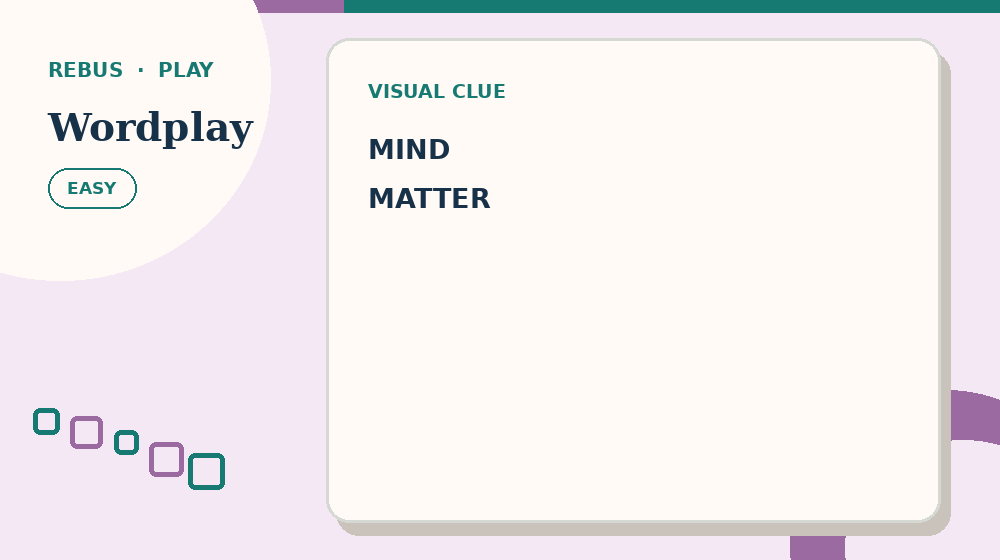
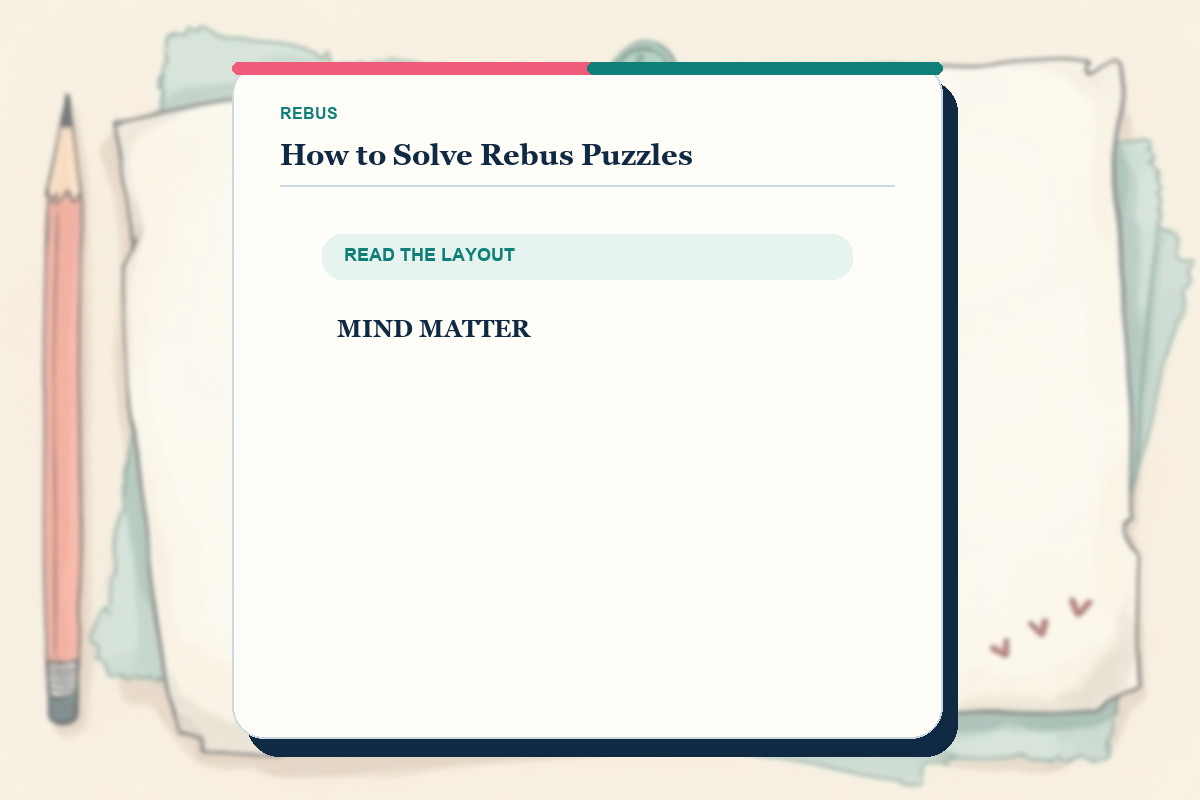
Start by naming exactly what is visible without proposing an answer. Read every word, count repetitions and describe position, spacing, size, direction and any missing or broken element.
Turn the layout into a literal sentence using relationship words such as over, under, inside, between, before, after, backwards or repeated. Say that sentence aloud and listen for a familiar phrase.
Before continuing, open Easy Rebus Puzzles and practise this first move: name every visible word or symbol without interpreting it. The complete activity makes the setup advice above easier to judge than an isolated example.
Accept an answer only when it explains every deliberate feature. If the phrase accounts for the word but ignores its position or repetition, keep it as a candidate rather than the solution.
Understand the exact job of this activity
In How to Solve Rebus Puzzles, success means you can translate visual relationships into familiar words, phrases or sayings. The relevant evidence is word position, repetition, size, spacing, direction and any visual operation that changes the literal reading. Decoration, familiarity with the theme and confidence are not evidence by themselves.
Use one visual feature—position, repetition, size, spacing or direction—and the phrase fragment it suggests to keep the decision local. Start by doing this: name every visible word or symbol without interpreting it. If you cannot name what changed, do not add another permanent answer or mark.
Measure progress by this standard: count explained visual features, not unrelated phrases generated by free association. When progress stops, return to this method: notice repetition, spacing, direction and size. State the reason for changing approach before you make the next move.
Prepare the materials and the decision record
For How to Solve Rebus Puzzles, lay out one rebus at a time, an optional hint and permission to say possible phrases aloud. Keep any answer material closed or out of reach until the attempt has a complete result or a precisely stated question.
On paper, cover the answer area and annotate position or repetition without redrawing the rebus. On screen, open hints one at a time and keep the original arrangement visible while testing a phrase. Check the real input method before starting so a print, zoom or touch problem is not mistaken for puzzle difficulty.
Record uncertain work this way: write a candidate phrase beside a short explanation of every visible feature before confirming it. If teens, adults, families and classroom groups pause and return later, the record should show what is confirmed, what is provisional and what was rejected.
- Goal: translate visual relationships into familiar words, phrases or sayings.
- First action: name every visible word or symbol without interpreting it.
- Working unit: one visual feature—position, repetition, size, spacing or direction—and the phrase fragment it suggests.
- Final check: say the proposed phrase aloud and explain how each visual feature contributes to it.
Decode one rebus card
Step 1 - Copy the visible text exactly, including repeated words and unusual capitalisation. Do not correct spelling unless the puzzle clearly signals an error.
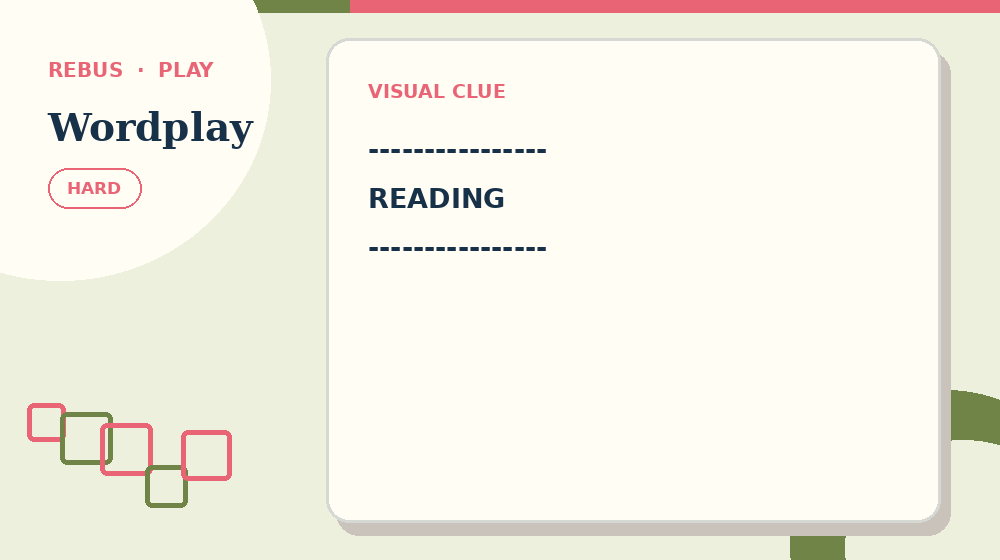
Step 2 - Describe the geometry in plain language: one word is above another, a word sits inside letters, or several copies form a line.
Use Rebus Puzzles for the next pass. Try to describe position using words such as over, under, inside and between without opening the answer material, then return here and name the evidence that supported the decision.
Step 3 - Combine text and geometry into two or three literal descriptions. Prefer ordinary relationship words before searching for obscure idioms.
Step 4 - Say each description aloud and compare it with familiar expressions. Keep candidates that explain the strongest visual feature.
Step 5 - Verify the chosen phrase against every meaningful mark. Use a category hint only when the literal description is clear but no familiar phrase comes to mind.
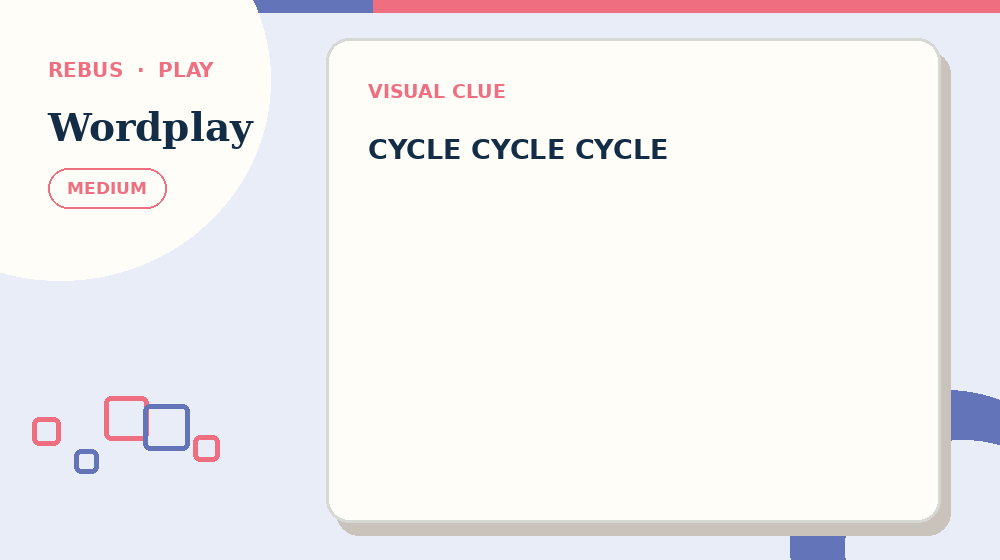
Worked example: repeated CYCLE
Suppose the card shows CYCLE three times in a circular or repeated arrangement. The inventory records one word, three occurrences and repetition as the dominant feature.
Describe the layout before naming an answer: cycle after cycle, cycles repeating, or a cycle that continues. Saying these descriptions aloud suggests a phrase about a repeated cycle.
Choose the official phrase only if it explains both the word CYCLE and the repetition. A candidate about circles may fit the theme but fails if no circular position is actually shown.
Decision log for the worked example
For the How to Solve Rebus Puzzles example, log the first observation created by this action: name every visible word or symbol without interpreting it. Write the observation itself, not a vague note that the step was completed.
Next, record what changed after you notice repetition, spacing, direction and size. If nothing changed, keep that result; an explicit no-change result prevents the same unproductive pass from being repeated.
Close the log with the final check: say the proposed phrase aloud and explain how each visual feature contributes to it. If the check fails, identify the earliest unsupported decision and connect it to one risk: reading only the printed word.
Diagnostic questions for How to Solve Rebus Puzzles
Can you explain why name every visible word or symbol without interpreting it is the correct opening for how to solve rebus puzzles? If not, restate the goal - translate visual relationships into familiar words, phrases or sayings - before making another mark.
Does the current record follow this rule: write a candidate phrase beside a short explanation of every visible feature before confirming it? If not, separate confirmed work from possibilities before the next method.
Which evidence supports the current decision: word position, repetition, size, spacing, direction and any visual operation that changes the literal reading? Remove any answer supported only by familiarity or appearance.
Have you checked for this specific failure: ignoring white space? Repair that issue locally instead of restarting unrelated work.
Can the final result pass this test: say the proposed phrase aloud and explain how each visual feature contributes to it? If not, leave the activity marked as unfinished and record the exact failing unit.
Adjust difficulty without changing the core skill
For an easier rebus activity, reduce phrase familiarity, number of visual operations, misleading literal readings and the amount of optional hint support while preserving the goal to translate visual relationships into familiar words, phrases or sayings. Keep the same opening method: name every visible word or symbol without interpreting it.
For a harder how to solve rebus puzzles task, add one source of complexity at a time. Continue to require this evidence: word position, repetition, size, spacing, direction and any visual operation that changes the literal reading. More decoration, smaller print or longer instructions do not create useful difficulty.
Now compare the method on Hard Rebus Puzzles. Keep the goal—translate visual relationships into familiar words, phrases or sayings—but change only the difficulty or theme, so the comparison shows whether the routine transfers.
For teens, adults, families and classroom groups, adjust the amount of material, available time or input method before removing the reasoning step. Assistance should make the evidence reachable without supplying the result.
Common mistakes and precise recovery actions
Watch for this first failure in How to Solve Rebus Puzzles: reading only the printed word. Stop, restore one visual feature—position, repetition, size, spacing or direction—and the phrase fragment it suggests and repeat this action: name every visible word or symbol without interpreting it.
A second risk is ignoring white space. Compare the current work with word position, repetition, size, spacing, direction and any visual operation that changes the literal reading; keep only decisions that the evidence supports.
If you notice forcing an obscure phrase too early, return to this method: notice repetition, spacing, direction and size. Record the corrected result before touching any later answer.
When opening all hints at once occurs, use this recovery procedure: set aside the candidate phrase, list every unexplained visual feature and test a new phrase only when it accounts for the complete arrangement. Continue only when the progress measure changes for a stated reason.
Prevent the final failure - accepting a phrase that does not explain every feature - by completing this action: use the hint to narrow the category rather than reveal the answer. Then run the verification for how to solve rebus puzzles: say the proposed phrase aloud and explain how each visual feature contributes to it.
Build a checklist for How to Solve Rebus Puzzles
Write the How to Solve Rebus Puzzles goal first: translate visual relationships into familiar words, phrases or sayings. Under it, copy this opening action: name every visible word or symbol without interpreting it. Leave space for the result, not merely a tick box.
Add the second and third checks in order: describe position using words such as over, under, inside and between; then notice repetition, spacing, direction and size. Beside both, print the record rule: write a candidate phrase beside a short explanation of every visible feature before confirming it.
Reserve a separate line for the hard-area pass: say the literal description aloud to hear a familiar phrase. Name the exact unit inspected so a later correction does not erase unrelated progress.
End the checklist with this action: use the hint to narrow the category rather than reveal the answer. Follow it immediately with the verification statement: say the proposed phrase aloud and explain how each visual feature contributes to it.
Test the checklist against the worked case - decoding a repeated CYCLE arrangement by describing what is visibly happening before naming the phrase. Rewrite any item that still needs the full article to explain what object to inspect or when to stop.
- Open with: name every visible word or symbol without interpreting it.
- Develop with: describe position using words such as over, under, inside and between.
- Discriminate with: notice repetition, spacing, direction and size.
- Resolve with: say the literal description aloud to hear a familiar phrase.
- Close with: use the hint to narrow the category rather than reveal the answer.
Discuss evidence without shouting answers
In a group, ask one person to inventory text and another to describe relationships. Collect literal descriptions before anyone announces a phrase.
Give points, if used, for a complete explanation rather than speed alone. A correct phrase without a visual account may be a lucky association.
If the step in “Discuss evidence without shouting answers” is still unclear, continue with How to Make Rebus Puzzles: A Step-by-Step Design Guide. It approaches the same puzzle format from a different decision point before you need to reveal an answer.
After the reveal, map each visible feature to one word in the phrase. This closing step teaches patterns that transfer to the next card.
A focused rebus-decoding routine
Minutes 0-3: inventory text, count, position, size, direction and spacing on one card.
Minutes 3-7: write two literal layout descriptions without naming an answer phrase.
Minutes 7-11: say both descriptions aloud and test familiar phrases against every visible feature.
Minutes 11-15: use one category hint if needed, then map the final phrase back to the complete inventory.
Preserve visual relationships
On paper, print each card at a size where spacing, direction and relative placement remain unmistakable.
Online, zoom the complete card as one unit; cropping one edge can remove the relationship carrying the clue.
Provide text alternatives that describe visible elements and geometry without revealing the intended phrase.
Look for better literal descriptions
Progress appears when solvers name position, count and spacing before guessing. Candidate phrases become fewer because each one must explain the complete card.
Try three fresh rebuses using different relationships. Cover the hints and require a visual inventory before phrase generation.
Review any missed card after the answer. If the layout description was accurate but the phrase was unfamiliar, the issue is recall; if a feature was omitted, practise visual inventory.
Keep a short decoding log with the literal description, first candidate, unexplained feature and final phrase. Review whether misses cluster around position, repetition, direction, spacing or sound. Practise the relationship category that was omitted rather than repeating the same answer card.
Test transfer with a card using familiar words but different geometry. If the solver guesses from the text and ignores placement, cover the phrase list and require the six-part inventory again. The method works when layout language arrives before answer associations.
When two phrases remain equally defensible, compare them feature by feature and flag the card for editorial review if neither wins. Skilled solving includes recognising ambiguous construction; it does not require pretending every published rebus has one perfect answer.
For every flagged card, preserve the visible inventory, both candidate explanations and the feature that fails to decide between them. This record gives an editor enough evidence to revise the layout or accept multiple answers.
Test the skill on a fresh puzzle
Open one linked rebus page and write down two actions before starting: name every visible word or symbol without interpreting it, followed by describe position using words such as over, under, inside and between. Put How to Solve Rebus Puzzles aside during the attempt.
At the first uncertain point, use this method without prompting: notice repetition, spacing, direction and size. Compare one confirmed result with one unresolved result and name the evidence separating them.
Complete the fresh attempt by doing this: use the hint to narrow the category rather than reveal the answer. Run the same final check - say the proposed phrase aloud and explain how each visual feature contributes to it - and record one specific adjustment for the next page.
What is a rebus?
A rebus is a word or phrase puzzle in which arrangement carries meaning. Printed words, letters, numbers or symbols may be repeated, separated, placed inside one another, turned, reduced or enlarged. The answer should explain both the visible content and the unusual relationship.
A crossword rebus is related but different: one crossword square may hold more than one letter, a symbol or another special entry required by the theme. A standalone rebus usually presents one visual arrangement to decode, while a crossword rebus must also satisfy crossing answers and the grid's theme rule.
- Name the visible content.
- Describe the relationship.
- Say the literal description aloud.
- Reject any answer that leaves a feature unexplained.
Frequently asked questions
What should I do first in How to Solve Rebus Puzzles?
Begin with the catalogued opening action for how to solve rebus puzzles: name every visible word or symbol without interpreting it. Apply it to one visual feature—position, repetition, size, spacing or direction—and the phrase fragment it suggests and record the result before moving to describe position using words such as over, under, inside and between.
How can I tell whether my how to solve rebus puzzles method is producing real progress?
For this rebus task, use the progress test 'count explained visual features, not unrelated phrases generated by free association'. A new mark counts only when it can be connected to word position, repetition, size, spacing, direction and any visual operation that changes the literal reading.
What should I do if I notice reading only the printed word?
Stop at the first affected unit and use the format-specific recovery: set aside the candidate phrase, list every unexplained visual feature and test a new phrase only when it accounts for the complete arrangement. Resume How to Solve Rebus Puzzles with notice repetition, spacing, direction and size instead of repeating the unsupported move.
When is it appropriate to check the answer for How to Solve Rebus Puzzles?
Check after completing this final action: use the hint to narrow the category rather than reveal the answer. Before opening the answer, write the exact unresolved point and test whether say the proposed phrase aloud and explain how each visual feature contributes to it.
How can I make this rebus practice more accessible?
Change size, spacing, session length or input method while preserving word position, repetition, size, spacing, direction and any visual operation that changes the literal reading. On paper, cover the answer area and annotate position or repetition without redrawing the rebus. On screen, open hints one at a time and keep the original arrangement visible while testing a phrase.
What should I practise after How to Solve Rebus Puzzles?
Choose a nearby how to solve rebus puzzles page and repeat two actions without reopening the article: name every visible word or symbol without interpreting it; then notice repetition, spacing, direction and size. Finish by checking that say the proposed phrase aloud and explain how each visual feature contributes to it.
Is a crossword rebus the same as a picture rebus?
No. A crossword rebus places multiple letters or a special symbol in one grid square, while a standalone rebus encodes a phrase through the arrangement of visible elements.