Use this guide as a working method, not a list of tricks. Read one section, apply it to a real activity, and keep the evidence that shows why each move works.
The short answer
Stop as soon as a duplicate or impossible cell appears. Identify the affected row, column and box, then trace backward to the most recent placement without a clear logical reason.
Remove that unsupported digit and restore candidate notes in its peers. Keep earlier placements that still have valid elimination or single proofs.
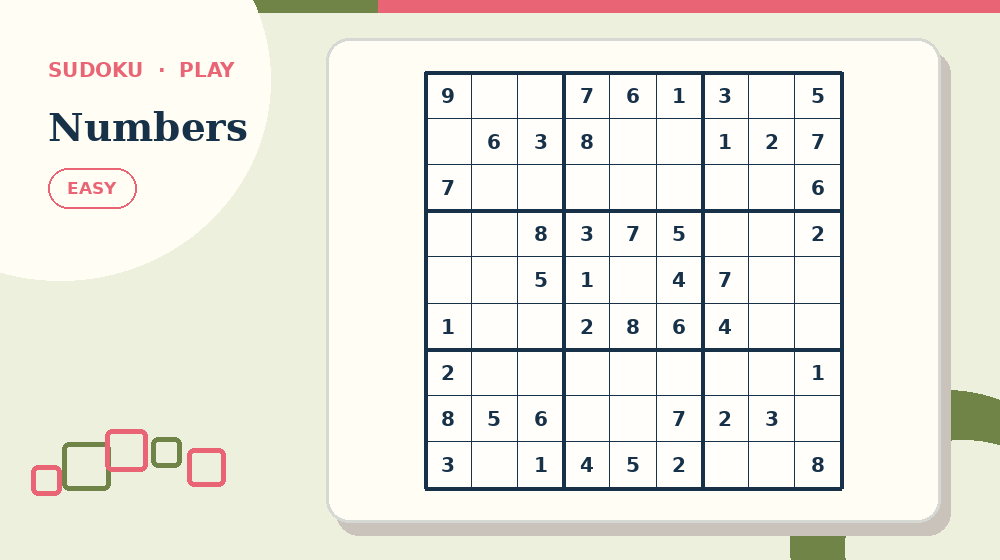
Before continuing, open Easy Sudoku and practise this first move: pause as soon as a duplicate appears. The complete activity makes the setup advice above easier to judge than an isolated example.
Resume from confirmed information instead of repeating the same guess. A contradiction is local evidence about the move history, not proof that the printed puzzle is wrong.
Understand the exact job of this activity
In Common Sudoku Mistakes and How to Recover, success means you can separate transcription errors, stale notes and unsupported guesses. The relevant evidence is the digits already present in the same row, column and box, together with the candidates those digits eliminate. Decoration, familiarity with the theme and confidence are not evidence by themselves.
Use one cell together with its row, column and 3×3 box to keep the decision local. Start by doing this: pause as soon as a duplicate appears. If you cannot name what changed, do not add another permanent answer or mark.
Measure progress by this standard: count justified placements and cleaned candidate sets rather than elapsed time alone. When progress stops, return to this method: work backward to the last unsupported placement. State the reason for changing approach before you make the next move.
Prepare the materials and the decision record
For Common Sudoku Mistakes and How to Recover, lay out a readable move history or erasable page and the last several certain placements. Keep any answer material closed or out of reach until the attempt has a complete result or a precisely stated question.
On paper, write candidates in consistent miniature positions and erase obsolete notes before they become clutter. On screen, select a cell, use notes for candidates and recheck highlighted peers after a placement. Check the real input method before starting so a print, zoom or touch problem is not mistaken for puzzle difficulty.
Record uncertain work this way: place a large digit only when the three units rule out every alternative; keep candidates small. If players who understand Sudoku rules but still reach dead ends pause and return later, the record should show what is confirmed, what is provisional and what was rejected.
- Goal: separate transcription errors, stale notes and unsupported guesses.
- First action: pause as soon as a duplicate appears.
- Working unit: one cell together with its row, column and 3×3 box.
- Final check: scan every row, column and box for duplicates, then compare the finished grid with the recorded solution.
Repair a contradiction without restarting
Step 1 - Circle the duplicate unit or zero-candidate cell and list the placements directly involved.
Step 2 - Check each placement's original proof, working backward from the newest. Printed givens and proven singles remain fixed.
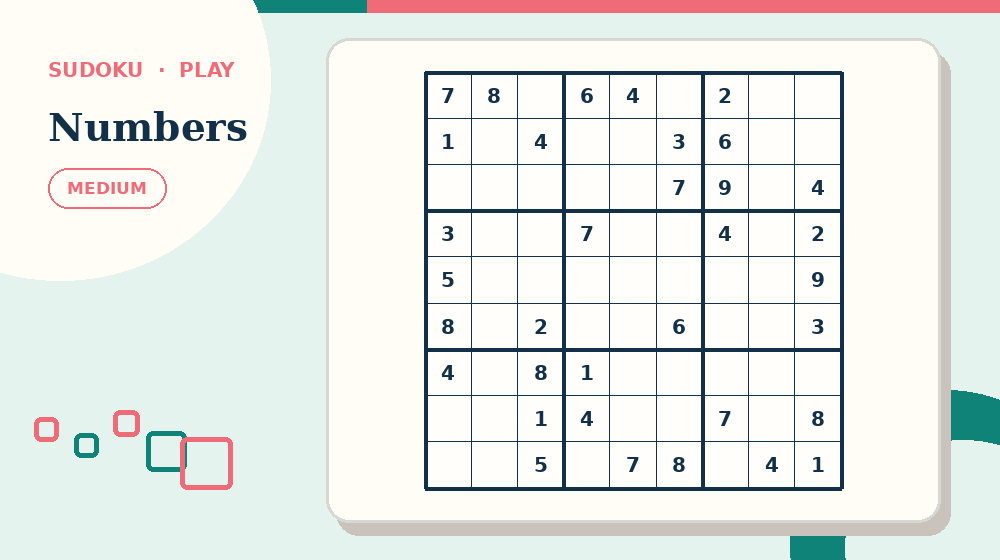
Use Medium Sudoku for the next pass. Try to check the row, column and box around the contradiction without opening the answer material, then return here and name the evidence that supported the decision.
Step 3 - Remove the first placement whose reason was a guess, stale note or transcription error.
Step 4 - Restore that digit and any dependent candidates to affected peers. Recompute candidates from the current grid.
Step 5 - Resume with a naked single, hidden single or other valid pattern. Record the new proof before continuing.
Worked example: two 6s in one column
Suppose column 5 contains two entered 6s. Check which one is a printed given or was placed from a proven single.
If the later 6 came from choosing between two candidates, remove it. Restore 6 as a candidate in cells affected by that placement.
Recompute the cell and its box. Continue only after another unit supplies a certain digit; do not move the guessed 6 to the other candidate cell.
Decision log for the worked example
For the Common Sudoku Mistakes and How to Recover example, log the first observation created by this action: pause as soon as a duplicate appears. Write the observation itself, not a vague note that the step was completed.
Next, record what changed after you work backward to the last unsupported placement. If nothing changed, keep that result; an explicit no-change result prevents the same unproductive pass from being repeated.
Close the log with the final check: scan every row, column and box for duplicates, then compare the finished grid with the recorded solution. If the check fails, identify the earliest unsupported decision and connect it to one risk: erasing random cells.
Diagnostic questions for Common Sudoku Mistakes and How to Recover
Can you explain why pause as soon as a duplicate appears is the correct opening for common sudoku mistakes? If not, restate the goal - separate transcription errors, stale notes and unsupported guesses - before making another mark.
Does the current record follow this rule: place a large digit only when the three units rule out every alternative; keep candidates small? If not, separate confirmed work from possibilities before the next method.
Which evidence supports the current decision: the digits already present in the same row, column and box, together with the candidates those digits eliminate? Remove any answer supported only by familiarity or appearance.
Have you checked for this specific failure: assuming the printed puzzle is wrong? Repair that issue locally instead of restarting unrelated work.
Can the final result pass this test: scan every row, column and box for duplicates, then compare the finished grid with the recorded solution? If not, leave the activity marked as unfinished and record the exact failing unit.
Adjust difficulty without changing the core skill
For an easier sudoku activity, reduce clue count, candidate density, the solving techniques required and how many logical steps must be chained together while preserving the goal to separate transcription errors, stale notes and unsupported guesses. Keep the same opening method: pause as soon as a duplicate appears.
For a harder common sudoku mistakes task, add one source of complexity at a time. Continue to require this evidence: the digits already present in the same row, column and box, together with the candidates those digits eliminate. More decoration, smaller print or longer instructions do not create useful difficulty.
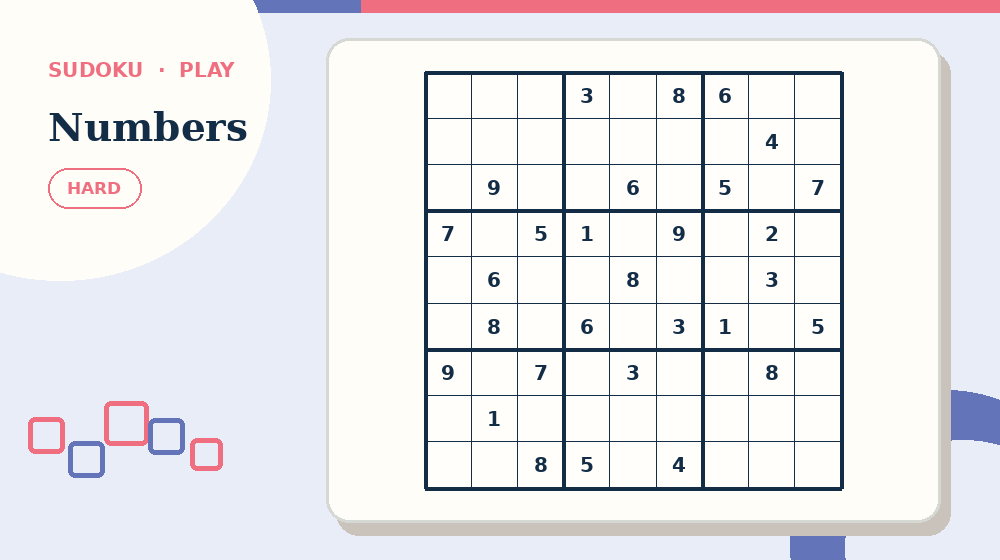
Now compare the method on Hard Sudoku. Keep the goal—separate transcription errors, stale notes and unsupported guesses—but change only the difficulty or theme, so the comparison shows whether the routine transfers.
For players who understand Sudoku rules but still reach dead ends, adjust the amount of material, available time or input method before removing the reasoning step. Assistance should make the evidence reachable without supplying the result.
Common mistakes and precise recovery actions
Watch for this first failure in Common Sudoku Mistakes and How to Recover: erasing random cells. Stop, restore one cell together with its row, column and 3×3 box and repeat this action: pause as soon as a duplicate appears.
A second risk is assuming the printed puzzle is wrong. Compare the current work with the digits already present in the same row, column and box, together with the candidates those digits eliminate; keep only decisions that the evidence supports.
If you notice using the answer key as the first diagnostic, return to this method: work backward to the last unsupported placement. Record the corrected result before touching any later answer.
When keeping notes created by a removed digit occurs, use this recovery procedure: remove the last unsupported digit, restore candidates in its row, column and box, and resume from the most recent proven placement. Continue only when the progress measure changes for a stated reason.
Prevent the final failure - rushing to recover lost time - by completing this action: resume from confirmed information rather than the same guess. Then run the verification for common sudoku mistakes: scan every row, column and box for duplicates, then compare the finished grid with the recorded solution.
Build a checklist for Common Sudoku Mistakes and How to Recover
Write the Common Sudoku Mistakes and How to Recover goal first: separate transcription errors, stale notes and unsupported guesses. Under it, copy this opening action: pause as soon as a duplicate appears. Leave space for the result, not merely a tick box.
Add the second and third checks in order: check the row, column and box around the contradiction; then work backward to the last unsupported placement. Beside both, print the record rule: place a large digit only when the three units rule out every alternative; keep candidates small.
Reserve a separate line for the hard-area pass: restore candidates affected by the removed digit. Name the exact unit inspected so a later correction does not erase unrelated progress.
End the checklist with this action: resume from confirmed information rather than the same guess. Follow it immediately with the verification statement: scan every row, column and box for duplicates, then compare the finished grid with the recorded solution.
Test the checklist against the worked case - recovering from two 6s in one column by tracing which placement lacked a single or elimination proof. Rewrite any item that still needs the full article to explain what object to inspect or when to stop.
- Open with: pause as soon as a duplicate appears.
- Develop with: check the row, column and box around the contradiction.
- Discriminate with: work backward to the last unsupported placement.
- Resolve with: restore candidates affected by the removed digit.
- Close with: resume from confirmed information rather than the same guess.
Teaching, family and group use
When demonstrating Common Sudoku Mistakes and How to Recover, model one complete unit: one cell together with its row, column and 3×3 box. Say which evidence matters, perform this action - pause as soon as a duplicate appears - and stop after the result is recorded.
For shared use, organise participation this way: one solver proposes a digit while the other names the row, column or box that proves it. Rotate responsibility after a small milestone so one person does not make and approve every decision.
If the step in “Teaching, family and group use” is still unclear, continue with How to Play Sudoku: A Beginner’s Guide. It approaches the same puzzle format from a different decision point before you need to reveal an answer.
If players who understand Sudoku rules but still reach dead ends need help, ask what has been ruled out and which method comes next. Point back to work backward to the last unsupported placement rather than revealing the solution.
At the end, ask which action changed the most information. Record one adjustment for the next sudoku page and keep private performance notes off public leaderboards.
A focused Sudoku recovery drill
Minutes 0-3: locate one contradiction and copy the affected row, column and box before erasing.
Minutes 3-8: work backward through recent placements and label each given, proven or unsupported.
Minutes 8-12: remove the earliest unsupported move and restore every dependent candidate.
Minutes 12-15: find one valid next step, update peers and verify that the original contradiction is gone.
Preserve a visible undo path
On paper, use erasable entries and sequence marks beside uncertain placements; never overwrite printed givens.
Online, undo must restore answers and candidate notes together. Review the move history before clearing a large region.
At zoom, keep all three affected units reachable so recovery does not repair one duplicate while hiding another.
Measure repair precision
Recovery improves when fewer cells need erasing and the removed move has a named missing proof.
On the next puzzle, mark any speculative entry before continuing. Better still, leave it unresolved and search another unit.
After repair, verify all rows, columns and boxes touched by the change. A vanished duplicate may leave another contradiction behind.
Maintain a private error log with four fields: visible symptom, earliest unsupported action, candidates restored and first valid move after repair. Review several entries for patterns. Repeated transcription errors need slower input checks; repeated unsupported guesses need a stronger stopping rule; stale notes need immediate peer updates.
Reopen a saved contradictory state after a day and repeat the diagnosis without the previous correction visible. A dependable recovery method should find the same unsupported dependency and preserve the same confirmed placements. If the repair differs widely, improve the move record before attempting harder grids.
Do not count a repair as complete merely because the duplicate disappears. Recompute candidates in every affected peer, run a full unit check and explain why the new next move is legal. Recovery ends with restored logical consistency, not with a visually cleaner grid.
Write that final verification beside the repaired unit.
Test the skill on a fresh puzzle
Open one linked sudoku page and write down two actions before starting: pause as soon as a duplicate appears, followed by check the row, column and box around the contradiction. Put Common Sudoku Mistakes and How to Recover aside during the attempt.
At the first uncertain point, use this method without prompting: work backward to the last unsupported placement. Compare one confirmed result with one unresolved result and name the evidence separating them.
Complete the fresh attempt by doing this: resume from confirmed information rather than the same guess. Run the same final check - scan every row, column and box for duplicates, then compare the finished grid with the recorded solution - and record one specific adjustment for the next page.
Frequently asked questions
What should I do first in Common Sudoku Mistakes and How to Recover?
Begin with the catalogued opening action for common sudoku mistakes: pause as soon as a duplicate appears. Apply it to one cell together with its row, column and 3×3 box and record the result before moving to check the row, column and box around the contradiction.
How can I tell whether my common sudoku mistakes method is producing real progress?
For this sudoku task, use the progress test 'count justified placements and cleaned candidate sets rather than elapsed time alone'. A new mark counts only when it can be connected to the digits already present in the same row, column and box, together with the candidates those digits eliminate.
What should I do if I notice erasing random cells?
Stop at the first affected unit and use the format-specific recovery: remove the last unsupported digit, restore candidates in its row, column and box, and resume from the most recent proven placement. Resume Common Sudoku Mistakes and How to Recover with work backward to the last unsupported placement instead of repeating the unsupported move.
When is it appropriate to check the answer for Common Sudoku Mistakes and How to Recover?
Check after completing this final action: resume from confirmed information rather than the same guess. Before opening the answer, write the exact unresolved point and test whether scan every row, column and box for duplicates, then compare the finished grid with the recorded solution.
How can I make this sudoku practice more accessible?
Change size, spacing, session length or input method while preserving the digits already present in the same row, column and box, together with the candidates those digits eliminate. On paper, write candidates in consistent miniature positions and erase obsolete notes before they become clutter. On screen, select a cell, use notes for candidates and recheck highlighted peers after a placement.
What should I practise after Common Sudoku Mistakes and How to Recover?
Choose a nearby common sudoku mistakes page and repeat two actions without reopening the article: pause as soon as a duplicate appears; then work backward to the last unsupported placement. Finish by checking that scan every row, column and box for duplicates, then compare the finished grid with the recorded solution.