Use this guide as a working method, not a list of tricks. Read one section, apply it to a real activity, and keep the evidence that shows why each move works.
The short answer
The central task in How to Write Good Trivia Questions is to remove ambiguity while preserving an enjoyable moment of recall. Begin here: start from a verified fact rather than a clever wording. Continue only after that action produces a result you can point to, describe or record.
For how to write trivia questions, prepare a reliable source, a defined audience and an answer record that includes an explanation. Treat one complete question, its accepted answer, source note and scoring decision as the working unit. That boundary keeps one uncertain decision from spreading into unrelated parts of the activity.
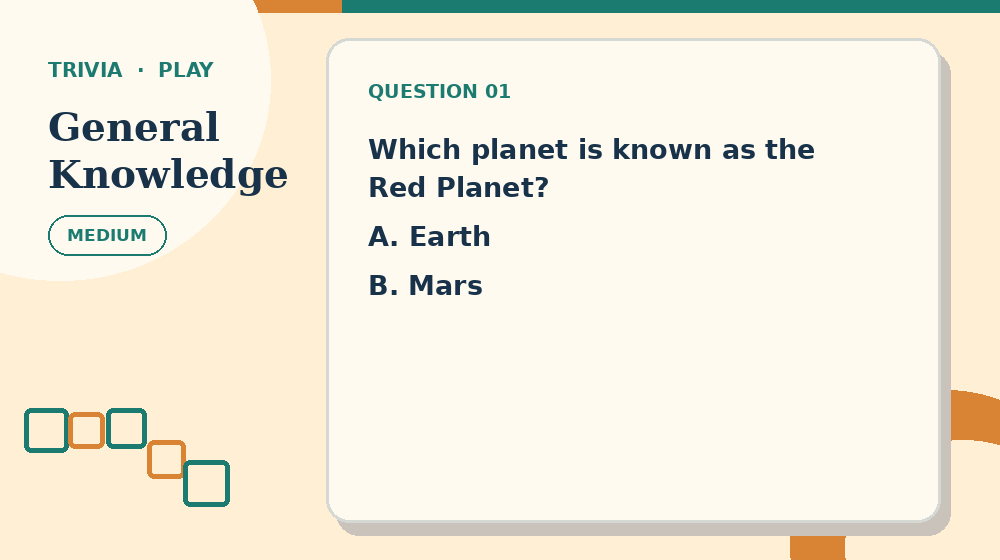
Before continuing, open General Knowledge Trivia and practise this first move: start from a verified fact rather than a clever wording. The complete activity makes the setup advice above easier to judge than an isolated example.
Complete the attempt with this action: fact-check the final wording rather than only the answer. Then verify the result by checking that check the accepted answer and explanation against the cited fact before recording the point. A fast finish without that check is not a dependable solution.
Understand the exact job of this activity
In How to Write Good Trivia Questions, success means you can remove ambiguity while preserving an enjoyable moment of recall. The relevant evidence is the exact wording of the question, a reliable source, the accepted answer and any scoring rule announced before play. Decoration, familiarity with the theme and confidence are not evidence by themselves.
Use one complete question, its accepted answer, source note and scoring decision to keep the decision local. Start by doing this: start from a verified fact rather than a clever wording. If you cannot name what changed, do not add another permanent answer or mark.
Measure progress by this standard: track completed rounds, resolved disputes and score totals rather than the loudness of the room. When progress stops, return to this method: ask for one unit of information. State the reason for changing approach before you make the next move.
Prepare the materials and the decision record
For How to Write Good Trivia Questions, lay out a reliable source, a defined audience and an answer record that includes an explanation. Keep any answer material closed or out of reach until the attempt has a complete result or a precisely stated question.
On paper, separate question cards, answer sheets and the host key so no solution is exposed early. On screen, keep the question visible during the answer window and reveal the explanation only after responses lock. Check the real input method before starting so a print, zoom or touch problem is not mistaken for puzzle difficulty.
Record uncertain work this way: write each team response before revealing the answer and update the score at the end of the round. If teachers, hosts, editors and activity creators pause and return later, the record should show what is confirmed, what is provisional and what was rejected.
- Goal: remove ambiguity while preserving an enjoyable moment of recall.
- First action: start from a verified fact rather than a clever wording.
- Working unit: one complete question, its accepted answer, source note and scoring decision.
- Final check: check the accepted answer and explanation against the cited fact before recording the point.
A step-by-step method
Step 1 - Start from a verified fact rather than a clever wording. For How to Write Good Trivia Questions, this opening action defines what deserves attention before any answer is committed.
Step 2 - State the scope, date or category when it matters. Record the result using this rule: write each team response before revealing the answer and update the score at the end of the round. Do not rely on memory when the activity may be paused or corrected.
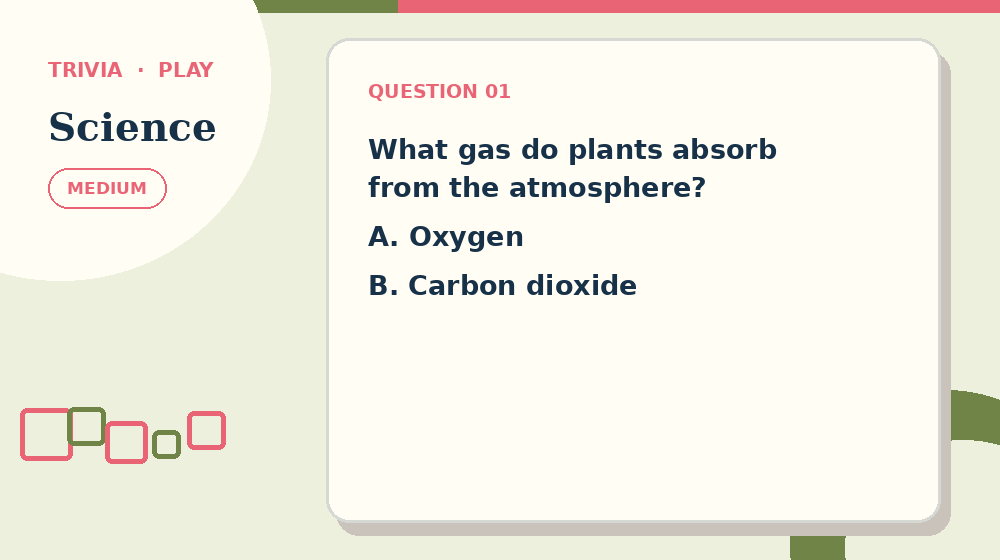
Use Science Trivia for the next pass. Try to state the scope, date or category when it matters without opening the answer material, then return here and name the evidence that supported the decision.
Step 3 - Ask for one unit of information. Compare the new evidence with the exact wording of the question, a reliable source, the accepted answer and any scoring rule announced before play. If they conflict, resolve the conflict before continuing.
Step 4 - Write plausible distractors from the same category. Use this pass on the hardest unresolved part, not automatically on the most visually prominent area.
Step 5 - Fact-check the final wording rather than only the answer. Finish by checking that check the accepted answer and explanation against the cited fact before recording the point. Record any remaining uncertainty instead of disguising it as completion.
A worked practice example
Use this concrete case for How to Write Good Trivia Questions: rewriting a vague largest-country question to specify whether area, population or another measure is being tested. Before acting, identify which part of the example supplies the exact wording of the question, a reliable source, the accepted answer and any scoring rule announced before play.
Apply the first two methods in order: start from a verified fact rather than a clever wording; then state the scope, date or category when it matters. Write down the result of each pass so the example can be resumed without repeating the same scan.
Continue with this discriminating action: ask for one unit of information. If it changes the working record, follow with write plausible distractors from the same category. Finish only after you fact-check the final wording rather than only the answer and confirm that check the accepted answer and explanation against the cited fact before recording the point.
Decision log for the worked example
For the How to Write Good Trivia Questions example, log the first observation created by this action: start from a verified fact rather than a clever wording. Write the observation itself, not a vague note that the step was completed.
Next, record what changed after you ask for one unit of information. If nothing changed, keep that result; an explicit no-change result prevents the same unproductive pass from being repeated.
Close the log with the final check: check the accepted answer and explanation against the cited fact before recording the point. If the check fails, identify the earliest unsupported decision and connect it to one risk: using absolutes such as always without evidence.
Diagnostic questions for How to Write Good Trivia Questions
Can you explain why start from a verified fact rather than a clever wording is the correct opening for how to write trivia questions? If not, restate the goal - remove ambiguity while preserving an enjoyable moment of recall - before making another mark.
Does the current record follow this rule: write each team response before revealing the answer and update the score at the end of the round? If not, separate confirmed work from possibilities before the next method.
Which evidence supports the current decision: the exact wording of the question, a reliable source, the accepted answer and any scoring rule announced before play? Remove any answer supported only by familiarity or appearance.
Have you checked for this specific failure: asking two questions in one sentence? Repair that issue locally instead of restarting unrelated work.
Can the final result pass this test: check the accepted answer and explanation against the cited fact before recording the point? If not, leave the activity marked as unfinished and record the exact failing unit.
Adjust difficulty without changing the core skill
For an easier trivia activity, reduce topic familiarity, question specificity, recall depth, answer format, time allowance and the quality of distractors while preserving the goal to remove ambiguity while preserving an enjoyable moment of recall. Keep the same opening method: start from a verified fact rather than a clever wording.
For a harder how to write trivia questions task, add one source of complexity at a time. Continue to require this evidence: the exact wording of the question, a reliable source, the accepted answer and any scoring rule announced before play. More decoration, smaller print or longer instructions do not create useful difficulty.
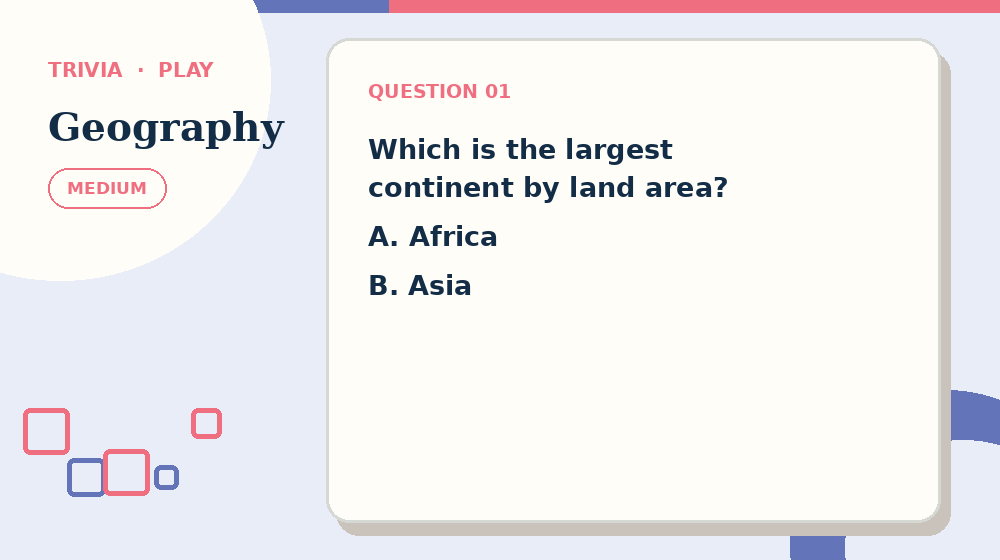
Now compare the method on Geography Trivia. Keep the goal—remove ambiguity while preserving an enjoyable moment of recall—but change only the difficulty or theme, so the comparison shows whether the routine transfers.
For teachers, hosts, editors and activity creators, adjust the amount of material, available time or input method before removing the reasoning step. Assistance should make the evidence reachable without supplying the result.
Common mistakes and precise recovery actions
Watch for this first failure in How to Write Good Trivia Questions: using absolutes such as always without evidence. Stop, restore one complete question, its accepted answer, source note and scoring decision and repeat this action: start from a verified fact rather than a clever wording.
A second risk is asking two questions in one sentence. Compare the current work with the exact wording of the question, a reliable source, the accepted answer and any scoring rule announced before play; keep only decisions that the evidence supports.
If you notice creating trick wording unrelated to knowledge, return to this method: ask for one unit of information. Record the corrected result before touching any later answer.
When using outdated records without a date occurs, use this recovery procedure: return to the published question, answer and scoring rule, rescore only the affected response, and announce the correction before play resumes. Continue only when the progress measure changes for a stated reason.
Prevent the final failure - writing an explanation that merely repeats the answer - by completing this action: fact-check the final wording rather than only the answer. Then run the verification for how to write trivia questions: check the accepted answer and explanation against the cited fact before recording the point.
Build a checklist for How to Write Good Trivia Questions
Write the How to Write Good Trivia Questions goal first: remove ambiguity while preserving an enjoyable moment of recall. Under it, copy this opening action: start from a verified fact rather than a clever wording. Leave space for the result, not merely a tick box.
Add the second and third checks in order: state the scope, date or category when it matters; then ask for one unit of information. Beside both, print the record rule: write each team response before revealing the answer and update the score at the end of the round.
Reserve a separate line for the hard-area pass: write plausible distractors from the same category. Name the exact unit inspected so a later correction does not erase unrelated progress.
End the checklist with this action: fact-check the final wording rather than only the answer. Follow it immediately with the verification statement: check the accepted answer and explanation against the cited fact before recording the point.
Test the checklist against the worked case - rewriting a vague largest-country question to specify whether area, population or another measure is being tested. Rewrite any item that still needs the full article to explain what object to inspect or when to stop.
- Open with: start from a verified fact rather than a clever wording.
- Develop with: state the scope, date or category when it matters.
- Discriminate with: ask for one unit of information.
- Resolve with: write plausible distractors from the same category.
- Close with: fact-check the final wording rather than only the answer.
Teaching, family and group use
When demonstrating How to Write Good Trivia Questions, model one complete unit: one complete question, its accepted answer, source note and scoring decision. Say which evidence matters, perform this action - start from a verified fact rather than a clever wording - and stop after the result is recorded.
For shared use, organise participation this way: the host reads and adjudicates while a separate scorekeeper records points and challenges. Rotate responsibility after a small milestone so one person does not make and approve every decision.
If the step in “Teaching, family and group use” is still unclear, continue with How to Host a Trivia Night That Runs Smoothly. It approaches the same puzzle format from a different decision point before you need to reveal an answer.
If teachers, hosts, editors and activity creators need help, ask what has been ruled out and which method comes next. Point back to ask for one unit of information rather than revealing the solution.
At the end, ask which action changed the most information. Record one adjustment for the next trivia page and keep private performance notes off public leaderboards.
A focused 15-minute practice routine
Minutes 0-3 for How to Write Good Trivia Questions: prepare a reliable source, a defined audience and an answer record that includes an explanation. State the goal to remove ambiguity while preserving an enjoyable moment of recall, then identify the first one complete question, its accepted answer, source note and scoring decision you will inspect.
Minutes 3-7 for how to write trivia questions: complete start from a verified fact rather than a clever wording, followed by state the scope, date or category when it matters. Record both outcomes using this rule: write each team response before revealing the answer and update the score at the end of the round.
Minutes 7-12: complete this action on the least certain result: ask for one unit of information. If the evidence supports a next move, continue with write plausible distractors from the same category; otherwise keep the uncertainty visible.
Minutes 12-15: complete fact-check the final wording rather than only the answer. End the trivia practice by checking that check the accepted answer and explanation against the cited fact before recording the point, even when the full page remains unfinished.
Print, screen and accessibility choices
To print How to Write Good Trivia Questions, follow this format rule: separate question cards, answer sheets and the host key so no solution is exposed early. Test one page at actual size and inspect the working area before producing a batch.
To use how to write trivia questions online, follow this screen rule: keep the question visible during the answer window and reveal the explanation only after responses lock. Verify keyboard, touch and mouse behaviour at the zoom level the player needs.
Accessibility support for teachers, hosts, editors and activity creators should preserve the evidence - the exact wording of the question, a reliable source, the accepted answer and any scoring rule announced before play - while changing size, contrast, input method or session length. Support access without silently supplying the answer.
How to know the method is working
For How to Write Good Trivia Questions, use this progress measure: track completed rounds, resolved disputes and score totals rather than the loudness of the room. Improvement should appear as smaller corrections and explanations that refer to the exact wording of the question, a reliable source, the accepted answer and any scoring rule announced before play.
Repeat a nearby how to write trivia questions activity within two days. Without reopening the guide, look for independent use of these actions: start from a verified fact rather than a clever wording; and ask for one unit of information.
Keep a short private note containing the page, difficulty, first error and verification result. Use it to select the next activity; do not turn it into a judgement about teachers, hosts, editors and activity creators.
Test the skill on a fresh puzzle
Open one linked trivia page and write down two actions before starting: start from a verified fact rather than a clever wording, followed by state the scope, date or category when it matters. Put How to Write Good Trivia Questions aside during the attempt.
At the first uncertain point, use this method without prompting: ask for one unit of information. Compare one confirmed result with one unresolved result and name the evidence separating them.
Complete the fresh attempt by doing this: fact-check the final wording rather than only the answer. Run the same final check - check the accepted answer and explanation against the cited fact before recording the point - and record one specific adjustment for the next page.
Frequently asked questions
What should I do first in How to Write Good Trivia Questions?
Begin with the catalogued opening action for how to write trivia questions: start from a verified fact rather than a clever wording. Apply it to one complete question, its accepted answer, source note and scoring decision and record the result before moving to state the scope, date or category when it matters.
How can I tell whether my how to write trivia questions method is producing real progress?
For this trivia task, use the progress test 'track completed rounds, resolved disputes and score totals rather than the loudness of the room'. A new mark counts only when it can be connected to the exact wording of the question, a reliable source, the accepted answer and any scoring rule announced before play.
What should I do if I notice using absolutes such as always without evidence?
Stop at the first affected unit and use the format-specific recovery: return to the published question, answer and scoring rule, rescore only the affected response, and announce the correction before play resumes. Resume How to Write Good Trivia Questions with ask for one unit of information instead of repeating the unsupported move.
When is it appropriate to check the answer for How to Write Good Trivia Questions?
Check after completing this final action: fact-check the final wording rather than only the answer. Before opening the answer, write the exact unresolved point and test whether check the accepted answer and explanation against the cited fact before recording the point.
How can I make this trivia practice more accessible?
Change size, spacing, session length or input method while preserving the exact wording of the question, a reliable source, the accepted answer and any scoring rule announced before play. On paper, separate question cards, answer sheets and the host key so no solution is exposed early. On screen, keep the question visible during the answer window and reveal the explanation only after responses lock.
What should I practise after How to Write Good Trivia Questions?
Choose a nearby how to write trivia questions page and repeat two actions without reopening the article: start from a verified fact rather than a clever wording; then ask for one unit of information. Finish by checking that check the accepted answer and explanation against the cited fact before recording the point.