Use this guide as a working method, not a list of tricks. Read one section, apply it to a real activity, and keep the evidence that shows why each move works.
The short answer
Download the original PDF, confirm whether it is US Letter or A4 and open it in a PDF viewer. Start with actual size or 100 percent.
Inspect orientation, printable margins and the entire grid in preview. Print one proof before a class set, especially when line geometry or large print matters.
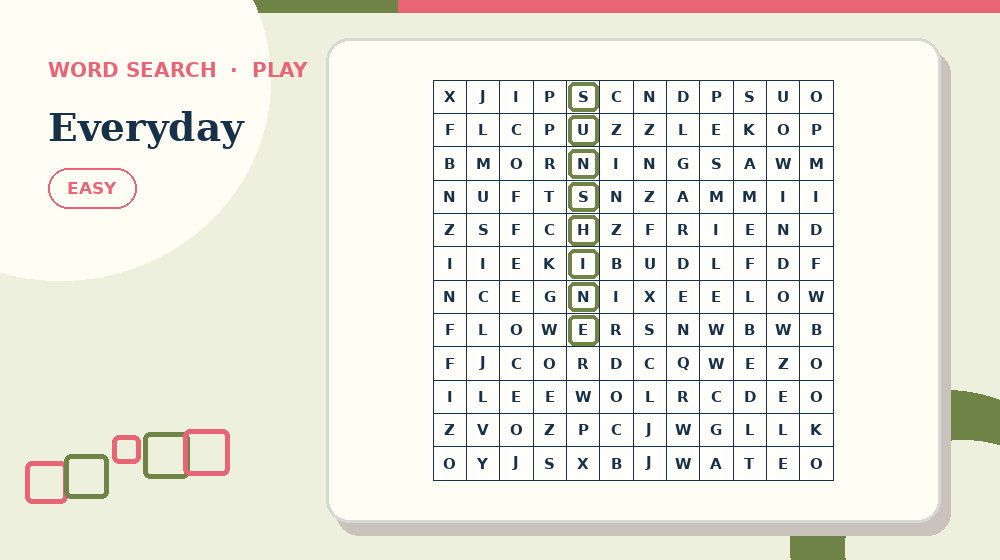
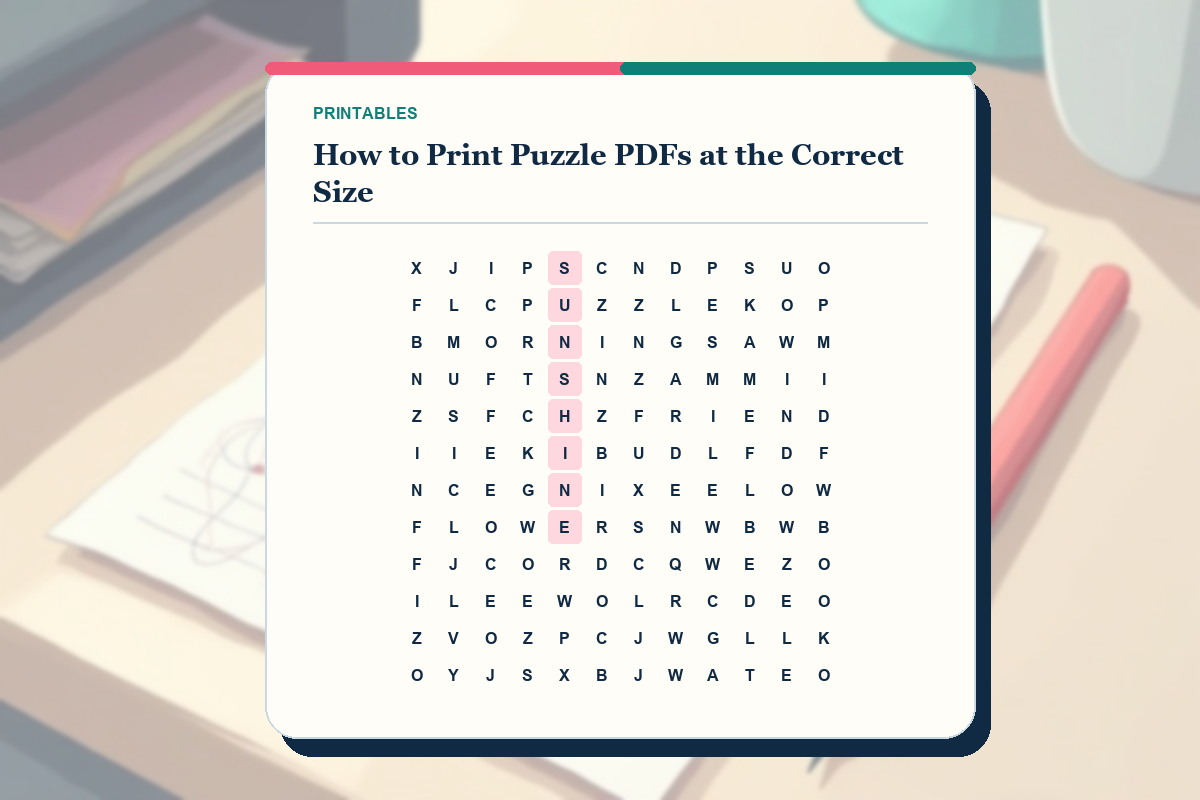
Before continuing, open Large-Print Word Search and practise this first move: confirm whether the file is US Letter or A4. The complete activity makes the setup advice above easier to judge than an isolated example.
Use fit only when the printer's non-printable area clips the source, and record the resulting percentage. Never substitute a mobile screenshot for the PDF.
Understand the exact job of this activity
In How to Print Puzzle PDFs at the Correct Size, success means you can preserve grid geometry, line weight and readable margins from the supplied PDF. The relevant evidence is the target spelling, a confirmed starting letter and an unbroken line of matching letters in an allowed direction. Decoration, familiarity with the theme and confidence are not evidence by themselves.
Use one target word, its first letter and one straight horizontal, vertical or diagonal path to keep the decision local. Start by doing this: confirm whether the file is US Letter or A4. If you cannot name what changed, do not add another permanent answer or mark.
Measure progress by this standard: count confirmed word-bank entries, not circles or promising letter fragments. When progress stops, return to this method: select actual size before trying fit options. State the reason for changing approach before you make the next move.
Prepare the materials and the decision record
For How to Print Puzzle PDFs at the Correct Size, lay out the original download, a PDF viewer and a printer loaded with the intended paper. Keep any answer material closed or out of reach until the attempt has a complete result or a precisely stated question.
On paper, use a fine pencil line or a transparent ruler edge so letters remain readable. On screen, use the focus aid or drag from the first letter to the last without changing direction. Check the real input method before starting so a print, zoom or touch problem is not mistaken for puzzle difficulty.
Record uncertain work this way: cross the target off only after every letter on the path matches. If home users, teachers, carers and group organizers pause and return later, the record should show what is confirmed, what is provisional and what was rejected.
- Goal: preserve grid geometry, line weight and readable margins from the supplied PDF.
- First action: confirm whether the file is US Letter or A4.
- Working unit: one target word, its first letter and one straight horizontal, vertical or diagonal path.
- Final check: retrace each marked word from its first letter to its last and compare it with the word bank.
Print one reliable proof
Step 1 - Open file properties and compare the PDF page dimensions with loaded paper.
Step 2 - Select portrait or landscape as specified and choose actual size. Inspect all four outer edges in preview.
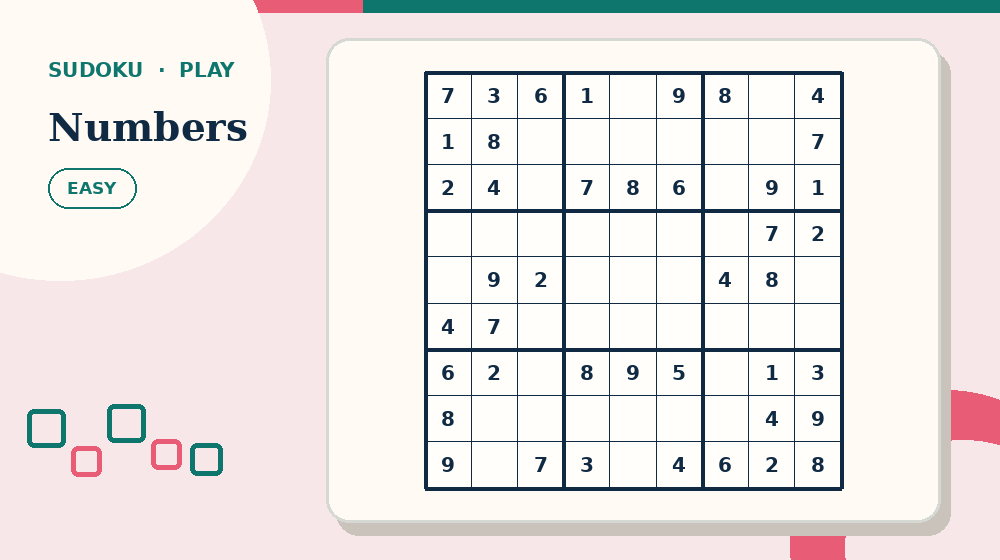
Use Large-Print Sudoku for the next pass. Try to open the PDF rather than the browser page without opening the answer material, then return here and name the evidence that supported the decision.
Step 3 - Print one puzzle page only. Measure or visually inspect cells, labels, margins and line contrast.
Step 4 - If clipping occurs, test a small fit reduction and record the percentage. Reject settings that make the working area uncomfortable.
Step 5 - Print the batch with the proven preset, then spot-check the first and last copies.
Worked example: a 9 by 9 Sudoku proof
Open the Sudoku PDF, confirm US Letter and choose portrait at 100 percent. Preview all nine columns and the footer.
Print one sheet and check that box boundaries remain heavier than cell lines and candidate space is usable.
Only after the proof passes should the remaining copies print. Keep the solution page out of duplex participant sets.
Decision log for the worked example
For the How to Print Puzzle PDFs at the Correct Size example, log the first observation created by this action: confirm whether the file is US Letter or A4. Write the observation itself, not a vague note that the step was completed.
Next, record what changed after you select actual size before trying fit options. If nothing changed, keep that result; an explicit no-change result prevents the same unproductive pass from being repeated.
Close the log with the final check: retrace each marked word from its first letter to its last and compare it with the word bank. If the check fails, identify the earliest unsupported decision and connect it to one risk: printing directly from a mobile screenshot.
Diagnostic questions for How to Print Puzzle PDFs at the Correct Size
Can you explain why confirm whether the file is US Letter or A4 is the correct opening for how to print puzzle pdf? If not, restate the goal - preserve grid geometry, line weight and readable margins from the supplied PDF - before making another mark.
Does the current record follow this rule: cross the target off only after every letter on the path matches? If not, separate confirmed work from possibilities before the next method.
Which evidence supports the current decision: the target spelling, a confirmed starting letter and an unbroken line of matching letters in an allowed direction? Remove any answer supported only by familiarity or appearance.
Have you checked for this specific failure: letting the driver rotate the page unexpectedly? Repair that issue locally instead of restarting unrelated work.
Can the final result pass this test: retrace each marked word from its first letter to its last and compare it with the word bank? If not, leave the activity marked as unfinished and record the exact failing unit.
Adjust difficulty without changing the core skill
For an easier printables activity, reduce grid dimensions, word length, allowed directions, backward placements, visual spacing and word-bank length while preserving the goal to preserve grid geometry, line weight and readable margins from the supplied PDF. Keep the same opening method: confirm whether the file is US Letter or A4.
For a harder how to print puzzle pdf task, add one source of complexity at a time. Continue to require this evidence: the target spelling, a confirmed starting letter and an unbroken line of matching letters in an allowed direction. More decoration, smaller print or longer instructions do not create useful difficulty.
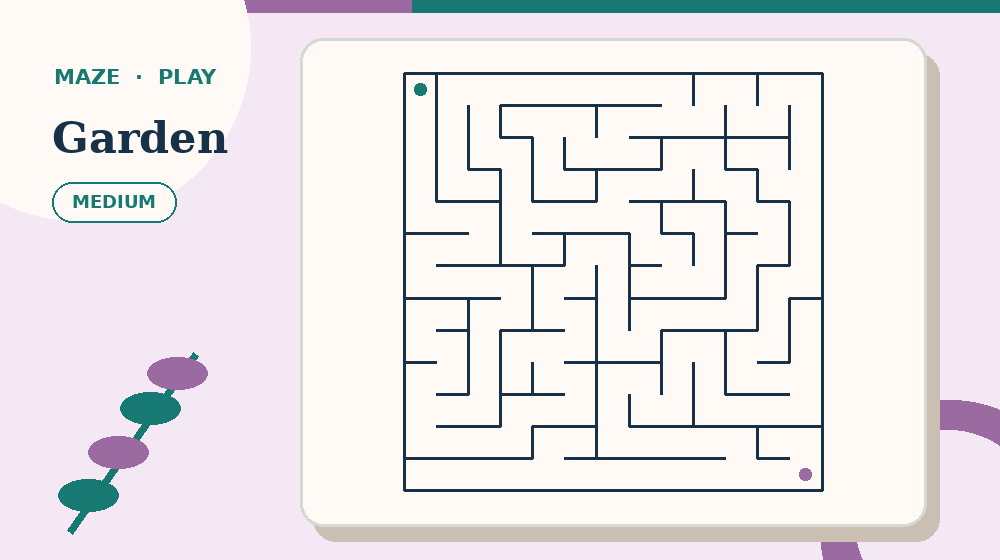
Now compare the method on Garden Maze. Keep the goal—preserve grid geometry, line weight and readable margins from the supplied PDF—but change only the difficulty or theme, so the comparison shows whether the routine transfers.
For home users, teachers, carers and group organizers, adjust the amount of material, available time or input method before removing the reasoning step. Assistance should make the evidence reachable without supplying the result.
Common mistakes and precise recovery actions
Watch for this first failure in How to Print Puzzle PDFs at the Correct Size: printing directly from a mobile screenshot. Stop, restore one target word, its first letter and one straight horizontal, vertical or diagonal path and repeat this action: confirm whether the file is US Letter or A4.
A second risk is letting the driver rotate the page unexpectedly. Compare the current work with the target spelling, a confirmed starting letter and an unbroken line of matching letters in an allowed direction; keep only decisions that the evidence supports.
If you notice scaling a large-print page down, return to this method: select actual size before trying fit options. Record the corrected result before touching any later answer.
When duplexing answer keys behind player sheets occurs, use this recovery procedure: erase the unsupported highlight, reopen the unfinished word bank and rescan the exact row or direction where the mismatch began. Continue only when the progress measure changes for a stated reason.
Prevent the final failure - making a full class set before testing one page - by completing this action: print one proof sheet before a batch. Then run the verification for how to print puzzle pdf: retrace each marked word from its first letter to its last and compare it with the word bank.
Build a checklist for How to Print Puzzle PDFs at the Correct Size
Write the How to Print Puzzle PDFs at the Correct Size goal first: preserve grid geometry, line weight and readable margins from the supplied PDF. Under it, copy this opening action: confirm whether the file is US Letter or A4. Leave space for the result, not merely a tick box.
Add the second and third checks in order: open the PDF rather than the browser page; then select actual size before trying fit options. Beside both, print the record rule: cross the target off only after every letter on the path matches.
Reserve a separate line for the hard-area pass: check orientation and margin preview. Name the exact unit inspected so a later correction does not erase unrelated progress.
End the checklist with this action: print one proof sheet before a batch. Follow it immediately with the verification statement: retrace each marked word from its first letter to its last and compare it with the word bank.
Test the checklist against the worked case - checking a Sudoku proof at 100 percent, confirming all nine columns fit, then printing the remaining copies. Rewrite any item that still needs the full article to explain what object to inspect or when to stop.
- Open with: confirm whether the file is US Letter or A4.
- Develop with: open the PDF rather than the browser page.
- Discriminate with: select actual size before trying fit options.
- Resolve with: check orientation and margin preview.
- Close with: print one proof sheet before a batch.
Teaching, family and group use
When demonstrating How to Print Puzzle PDFs at the Correct Size, model one complete unit: one target word, its first letter and one straight horizontal, vertical or diagonal path. Say which evidence matters, perform this action - confirm whether the file is US Letter or A4 - and stop after the result is recorded.
For shared use, organise participation this way: one person reads the word bank while the other scans a defined row or direction. Rotate responsibility after a small milestone so one person does not make and approve every decision.
If the step in “Teaching, family and group use” is still unclear, continue with How to Solve a Word Search Faster. It approaches the same puzzle format from a different decision point before you need to reveal an answer.
If home users, teachers, carers and group organizers need help, ask what has been ruled out and which method comes next. Point back to select actual size before trying fit options rather than revealing the solution.
At the end, ask which action changed the most information. Record one adjustment for the next printables page and keep private performance notes off public leaderboards.
A 15-minute print-proof routine
Minutes 0-3: inspect PDF page dimensions, loaded paper, orientation and page range.
Minutes 3-7: preview at actual size and check every outer edge, answer-page separation and duplex status.
Minutes 7-12: print one proof and inspect line hierarchy, physical type size, cell dimensions and clipping.
Minutes 12-15: record the approved preset or adjust one setting and print a second proof before batching.
Print reliably from desktop or phone
On desktop, use a PDF viewer with explicit actual-size control and verify that the driver has not re-enabled fit or borderless enlargement.
On mobile, download the file, open the system print preview and confirm paper, orientation, scale and page range instead of printing the browser image.
For accessible output, preserve the source's intended large print and contrast. Change paper or printer path before shrinking the working area.
Keep a reproducible print preset
A successful proof has complete margins, readable labels, consistent line hierarchy and the intended physical working size.
Record printer, paper, orientation, scale and duplex setting for recurring batches. Reproof after driver or file changes.
Ask one player to handle the proof at normal viewing distance. Physical usability is the final check, not the preview thumbnail.
When a batch fails, compare it with the approved proof before changing settings. Separate file problems, driver changes, paper mismatch and low ink. Adjust only the identified cause, print one new proof and update the preset note with the date and printer name.
Keep participant sheets and answer keys in separate labelled stacks after printing. Spot-check a middle copy for fading or feed drift, then count the final set. A correct first sheet does not guarantee that a long classroom batch remained aligned.
Test the skill on a fresh puzzle
Open one linked printables page and write down two actions before starting: confirm whether the file is US Letter or A4, followed by open the PDF rather than the browser page. Put How to Print Puzzle PDFs at the Correct Size aside during the attempt.
At the first uncertain point, use this method without prompting: select actual size before trying fit options. Compare one confirmed result with one unresolved result and name the evidence separating them.
Complete the fresh attempt by doing this: print one proof sheet before a batch. Run the same final check - retrace each marked word from its first letter to its last and compare it with the word bank - and record one specific adjustment for the next page.
Frequently asked questions
What should I do first in How to Print Puzzle PDFs at the Correct Size?
Begin with the catalogued opening action for how to print puzzle pdf: confirm whether the file is US Letter or A4. Apply it to one target word, its first letter and one straight horizontal, vertical or diagonal path and record the result before moving to open the PDF rather than the browser page.
How can I tell whether my how to print puzzle pdf method is producing real progress?
For this printables task, use the progress test 'count confirmed word-bank entries, not circles or promising letter fragments'. A new mark counts only when it can be connected to the target spelling, a confirmed starting letter and an unbroken line of matching letters in an allowed direction.
What should I do if I notice printing directly from a mobile screenshot?
Stop at the first affected unit and use the format-specific recovery: erase the unsupported highlight, reopen the unfinished word bank and rescan the exact row or direction where the mismatch began. Resume How to Print Puzzle PDFs at the Correct Size with select actual size before trying fit options instead of repeating the unsupported move.
When is it appropriate to check the answer for How to Print Puzzle PDFs at the Correct Size?
Check after completing this final action: print one proof sheet before a batch. Before opening the answer, write the exact unresolved point and test whether retrace each marked word from its first letter to its last and compare it with the word bank.
How can I make this printables practice more accessible?
Change size, spacing, session length or input method while preserving the target spelling, a confirmed starting letter and an unbroken line of matching letters in an allowed direction. On paper, use a fine pencil line or a transparent ruler edge so letters remain readable. On screen, use the focus aid or drag from the first letter to the last without changing direction.
What should I practise after How to Print Puzzle PDFs at the Correct Size?
Choose a nearby how to print puzzle pdf page and repeat two actions without reopening the article: confirm whether the file is US Letter or A4; then select actual size before trying fit options. Finish by checking that retrace each marked word from its first letter to its last and compare it with the word bank.