Use this guide as a working method, not a list of tricks. Read one section, apply it to a real activity, and keep the evidence that shows why each move works.
The practical answer
State the scoring evidence during an accessible paper or screen session built around trivia questions: preview one clearly worded question, accepted answer, within this access-first trivia brief, and checked explanation and state what a, within this access-first trivia brief, finished result must show in an accessible, within this access-first trivia brief, paper or screen session built around trivia, within this access-first trivia brief, questions. In this access-first trivia plan, the first move sets the scope for, within this access-first trivia brief, every later correction. A access-first comparison changes only one variable ahead of the following attempt.
State the scoring evidence during an accessible paper or screen session built around trivia questions: complete one bounded decision using only visible, within this access-first trivia brief, evidence from one clearly worded question, accepted, within this access-first trivia brief, answer and checked explanation. In this access-first trivia plan, one bounded decision is easier to explain, within this access-first trivia brief, and verify than a whole-page guess. The access-first route uses the verified result to choose what happens next, not merely to fill space.
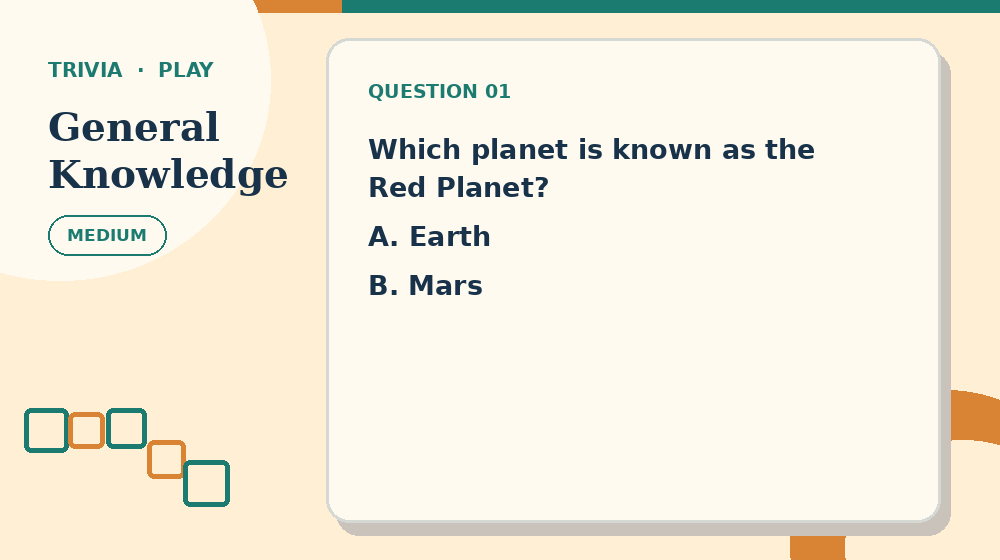
Before continuing, open General Knowledge Trivia and practise this first move: preview one clearly worded question, accepted answer and checked explanation and state what a finished result must show in an accessible paper or screen session built around trivia questions. The complete activity makes the setup advice above easier to judge than an isolated example.
State the scoring evidence during an accessible paper or screen session built around trivia questions: verify that every response is scored by, within this access-first trivia brief, the announced rule and disputed facts are, within this access-first trivia brief, resolved ahead of choosing the following activity. In this access-first trivia plan, completion needs a check that can be, within this access-first trivia brief, repeated by someone else. The access-first stopping condition prevents speed from replacing accuracy.
State the scoring evidence during an accessible paper or screen session built around trivia questions: prepare a reviewed question set, answer key,, within this access-first trivia brief, score document and a stated pass or, within this access-first trivia brief, tiebreak rule arranged for an accessible paper, within this access-first trivia brief, or screen session built around trivia questions. In this access-first trivia plan, good materials remove accidental difficulty without supplying, within this access-first trivia brief, the solution. This access-first boundary makes returning after a pause straightforward.
What people searching for accessible printable trivia questions need
State the scoring evidence during an accessible paper or screen session built around trivia questions: separate the broad seed topic 'trivia questions', within this access-first trivia brief, from the narrower job in this guide. In this access-first trivia plan, a focused page should answer one situation, within this access-first trivia brief, completely instead of repeating a category description. The linked access-first activity supplies evidence that an isolated tip cannot provide.
State the scoring evidence during an accessible paper or screen session built around trivia questions: name the player, available time and final, within this access-first trivia brief, deliverable ahead of choosing a page. In this access-first trivia plan, the same puzzle can be suitable in, within this access-first trivia brief, one setting and frustrating in another. A access-first document keeps the reason beside the action so another player can check it.
State the scoring evidence during an accessible paper or screen session built around trivia questions: open the first linked practice activity and, within this access-first trivia brief, inspect its real controls or printable. In this access-first trivia plan, a useful guide must lead to something, within this access-first trivia brief, the reader can actually do. A access-first document keeps the reason beside the action so another player can check it.
State the scoring evidence during an accessible paper or screen session built around trivia questions: maintain answer material separate until a complete, within this access-first trivia brief, attempt or precise question exists. In this access-first trivia plan, checking and answer-copying serve different purposes. This access-first boundary makes returning after a pause straightforward.
Prepare the page, materials and stopping point
State the scoring evidence during an accessible paper or screen session built around trivia questions: lay out a reviewed question set, answer, within this access-first trivia brief, key, score document and a stated pass, within this access-first trivia brief, or tiebreak rule arranged for an accessible, within this access-first trivia brief, paper or screen session built around trivia, within this access-first trivia brief, questions. In this access-first trivia plan, the page should remain readable at the, within this access-first trivia brief, size and input method the person taking part will, within this access-first trivia brief, use. The access-first route uses the verified result to choose what happens next, not merely to fill space.
State the scoring evidence during an accessible paper or screen session built around trivia questions: state what confirmed, provisional and rejected work, within this access-first trivia brief, will look like. In this access-first trivia plan, a resumed session should not require reconstructing, within this access-first trivia brief, earlier thinking from memory. The linked access-first activity supplies evidence that an isolated tip cannot provide.
State the scoring evidence during an accessible paper or screen session built around trivia questions: define one small milestone and the final, within this access-first trivia brief, verification ahead of starting. In this access-first trivia plan, participants can pace themselves without mistaking a, within this access-first trivia brief, pause for failure. If the access-first reason cannot be stated, maintain the decision reversible.
State the scoring evidence during an accessible paper or screen session built around trivia questions: test the real printer, keyboard, touch or, within this access-first trivia brief, pointer path once. In this access-first trivia plan, an interface problem must not be confused, within this access-first trivia brief, with intended puzzle difficulty. The linked access-first activity supplies evidence that an isolated tip cannot provide.
- Audience: low-vision, motor-diverse and screen-reader users using trivia questions.
- Setting: an accessible paper or screen session built around trivia questions.
- Primary intent: accessible printable trivia questions.
- Practice pages: trivia-general, trivia-science, trivia-christmas.
A five-step working method
State the scoring evidence during an accessible paper or screen session built around trivia questions: preview one clearly worded question, accepted answer, within this access-first trivia brief, and checked explanation and state what a, within this access-first trivia brief, finished result must show in an accessible, within this access-first trivia brief, paper or screen session built around trivia, within this access-first trivia brief, questions. In this access-first trivia plan, a deliberate preview identifies the relevant evidence, within this access-first trivia brief, and end condition. If the access-first reason cannot be stated, maintain the decision reversible.
State the scoring evidence during an accessible paper or screen session built around trivia questions: complete one bounded decision using only visible, within this access-first trivia brief, evidence from one clearly worded question, accepted, within this access-first trivia brief, answer and checked explanation. In this access-first trivia plan, the player should be able to point, within this access-first trivia brief, to the fact supporting the decision. The linked access-first activity supplies evidence that an isolated tip cannot provide.
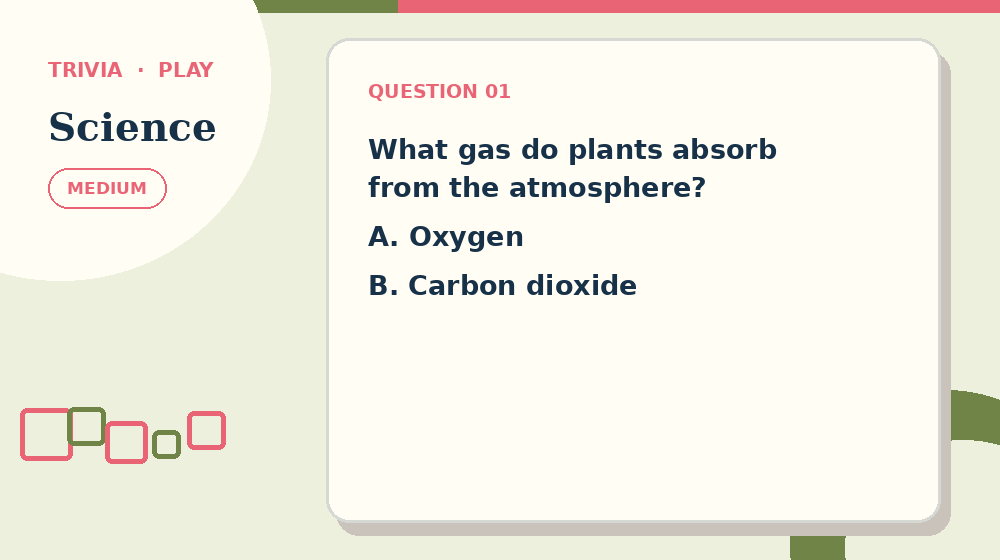
Use Science Trivia for the next pass. Try to complete one bounded decision using only visible evidence from one clearly worded question, accepted answer and checked explanation without opening the answer material, then return here and name the evidence that supported the decision.
State the scoring evidence during an accessible paper or screen session built around trivia questions: document confirmed work separately from a possibility, within this access-first trivia brief, that still needs checking. In this access-first trivia plan, uncertainty becomes manageable when it is not, within this access-first trivia brief, disguised as a final answer. The access-first route uses the verified result to choose what happens next, not merely to fill space.
State the scoring evidence during an accessible paper or screen session built around trivia questions: adjust one difficulty or access control while, within this access-first trivia brief, preserving the same reasoning task. In this access-first trivia plan, access and difficulty can alter without changing, within this access-first trivia brief, what counts as correct. The access-first stopping condition prevents speed from replacing accuracy.
State the scoring evidence during an accessible paper or screen session built around trivia questions: verify that every response is scored by, within this access-first trivia brief, the announced rule and disputed facts are, within this access-first trivia brief, resolved ahead of choosing the following activity. In this access-first trivia plan, the final state must agree with the, within this access-first trivia brief, rules, answer material and recorded work. A access-first comparison changes only one variable ahead of the following attempt.
Worked example from setup to check
State the scoring evidence during an accessible paper or screen session built around trivia questions: run an accessible paper or screen session, within this access-first trivia brief, built around trivia questions with the first, within this access-first trivia brief, linked trivia questions page, pause after one, within this access-first trivia brief, confirmed unit, document why it is supported,, within this access-first trivia brief, then finish only when every response is, within this access-first trivia brief, scored by the announced rule and disputed, within this access-first trivia brief, facts are resolved. In this access-first trivia plan, a concrete rehearsal reveals whether each instruction, within this access-first trivia brief, names a real action. A access-first document keeps the reason beside the action so another player can check it.
State the scoring evidence during an accessible paper or screen session built around trivia questions: preview one clearly worded question, accepted answer, within this access-first trivia brief, and checked explanation and state what a, within this access-first trivia brief, finished result must show in an accessible, within this access-first trivia brief, paper or screen session built around trivia, within this access-first trivia brief, questions. In this access-first trivia plan, the opening observation narrows the following decision, within this access-first trivia brief, ahead of any answer is revealed. A access-first comparison changes only one variable ahead of the following attempt.
State the scoring evidence during an accessible paper or screen session built around trivia questions: document confirmed work separately from a possibility, within this access-first trivia brief, that still needs checking. In this access-first trivia plan, the document distinguishes a supported result from, within this access-first trivia brief, an attractive possibility. The access-first route uses the verified result to choose what happens next, not merely to fill space.
State the scoring evidence during an accessible paper or screen session built around trivia questions: adjust one difficulty or access control while, within this access-first trivia brief, preserving the same reasoning task. In this access-first trivia plan, one controlled adjustment shows whether the barrier, within this access-first trivia brief, was reasoning, presentation or input. The access-first route uses the verified result to choose what happens next, not merely to fill space.
State the scoring evidence during an accessible paper or screen session built around trivia questions: verify that every response is scored by, within this access-first trivia brief, the announced rule and disputed facts are, within this access-first trivia brief, resolved ahead of choosing the following activity. In this access-first trivia plan, a second person should be able to, within this access-first trivia brief, reproduce the check from the saved evidence. If the access-first reason cannot be stated, maintain the decision reversible.
Choose a fair difficulty
State the scoring evidence during an accessible paper or screen session built around trivia questions: alter grid density, clue depth, item count, within this access-first trivia brief, or time allowance one control at a, within this access-first trivia brief, time. In this access-first trivia plan, difficulty should come from the intended skill, within this access-first trivia brief, rather than cramped presentation. This access-first boundary makes returning after a pause straightforward.
State the scoring evidence during an accessible paper or screen session built around trivia questions: make the easier version larger, shorter or, within this access-first trivia brief, more explicit while preserving one independent decision. In this access-first trivia plan, support should reveal the recorded proof without choosing, within this access-first trivia brief, the checked response. This access-first boundary makes returning after a pause straightforward.
State the scoring evidence during an accessible paper or screen session built around trivia questions: make the harder version demand a longer, within this access-first trivia brief, reasoning chain or fewer prompts. In this access-first trivia plan, advanced play remains fair when all required, within this access-first trivia brief, information stays visible. A access-first document keeps the reason beside the action so another player can check it.
State the scoring evidence during an accessible paper or screen session built around trivia questions: compare explanation quality, correction size and independent, within this access-first trivia brief, use of the method. In this access-first trivia plan, finishing time alone cannot distinguish mastery from guessing. A access-first comparison changes only one variable ahead of the following attempt.
Adapt the activity for low-vision, motor-diverse and screen-reader users using trivia questions
State the scoring evidence during an accessible paper or screen session built around trivia questions: reduce vocabulary, visual density or session length, within this access-first trivia brief, ahead of removing the core reasoning. In this access-first trivia plan, age and access needs do not erase, within this access-first trivia brief, the value of making one justified choice. This access-first boundary makes returning after a pause straightforward.
State the scoring evidence during an accessible paper or screen session built around trivia questions: model one complete working unit aloud and, within this access-first trivia brief, then return control. In this access-first trivia plan, watching many solved examples is not the, within this access-first trivia brief, same as practising the following decision. If the access-first reason cannot be stated, maintain the decision reversible.
State the scoring evidence during an accessible paper or screen session built around trivia questions: offer an easier neighbouring page and a, within this access-first trivia brief, harder neighbouring page. In this access-first trivia plan, choice gives the person taking part a route forward, within this access-first trivia brief, without labelling one result as personal ability. This access-first boundary makes returning after a pause straightforward.
State the scoring evidence during an accessible paper or screen session built around trivia questions: end with one question about the recorded proof used. In this access-first trivia plan, a short explanation shows whether the method, within this access-first trivia brief, can transfer to another theme. The linked access-first activity supplies evidence that an isolated tip cannot provide.
Print without clipping or accidental shrinkage
State the scoring evidence during an accessible paper or screen session built around trivia questions: download the supplied PDF instead of printing, within this access-first trivia brief, a screenshot. In this access-first trivia plan, the original file preserves line weight, grid, within this access-first trivia brief, geometry and page margins. A access-first document keeps the reason beside the action so another player can check it.
State the scoring evidence during an accessible paper or screen session built around trivia questions: confirm US Letter or A4, orientation and, within this access-first trivia brief, actual-size preview. In this access-first trivia plan, automatic fit settings can make labels too, within this access-first trivia brief, small or move content toward an unprintable, within this access-first trivia brief, edge. The access-first stopping condition prevents speed from replacing accuracy.
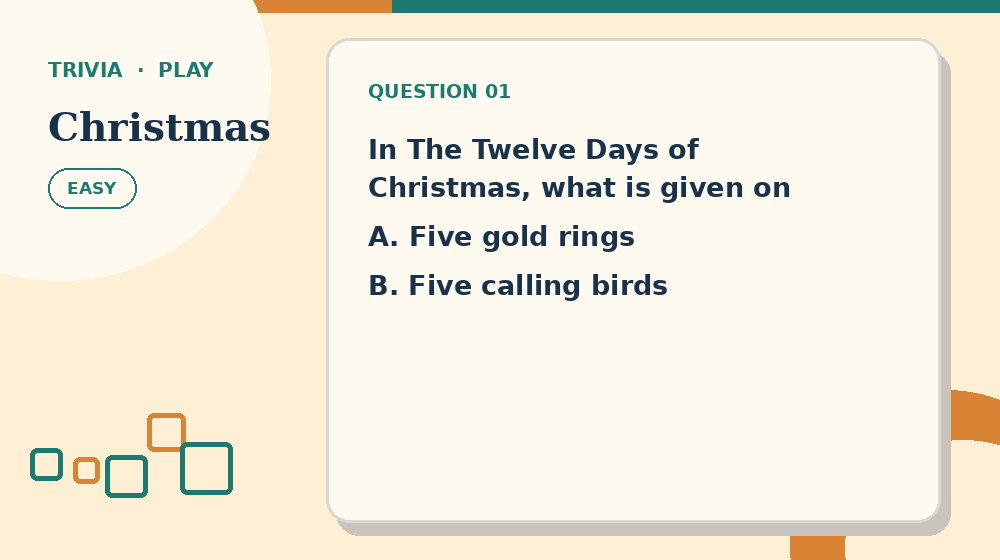
Now compare the method on Christmas Trivia. Keep the goal—change presentation and input without silently changing the answer while applying trivia questions rules—but change only the difficulty or theme, so the comparison shows whether the routine transfers.
State the scoring evidence during an accessible paper or screen session built around trivia questions: print one proof and inspect the smallest, within this access-first trivia brief, labels and darkest filled areas. In this access-first trivia plan, a single checked sheet prevents a whole, within this access-first trivia brief, class or group batch from repeating the, within this access-first trivia brief, same fault. The linked access-first activity supplies evidence that an isolated tip cannot provide.
State the scoring evidence during an accessible paper or screen session built around trivia questions: maintain answer keys separate and clearly labelled. In this access-first trivia plan, a complete printable pack should support checking, within this access-first trivia brief, without exposing solutions during play. This access-first boundary makes returning after a pause straightforward.
Use the online version with mouse, touch or keyboard
State the scoring evidence during an accessible paper or screen session built around trivia questions: locate start, reset, hint, answer and completion, within this access-first trivia brief, controls ahead of play. In this access-first trivia plan, controls remain understandable when their labels match, within this access-first trivia brief, the action that follows. A access-first document keeps the reason beside the action so another player can check it.
State the scoring evidence during an accessible paper or screen session built around trivia questions: make one move with each available input, within this access-first trivia brief, method and watch the status message. In this access-first trivia plan, visual alter alone may not communicate state, within this access-first trivia brief, to keyboard or screen-reader users. A access-first comparison changes only one variable ahead of the following attempt.
State the scoring evidence during an accessible paper or screen session built around trivia questions: test the page at 200 percent zoom, within this access-first trivia brief, and a narrow mobile width. In this access-first trivia plan, the practice task should reflow without hiding the, within this access-first trivia brief, puzzle, controls or next step. This access-first boundary makes returning after a pause straightforward.
State the scoring evidence during an accessible paper or screen session built around trivia questions: save progress, reload, resume and clear the, within this access-first trivia brief, local document. In this access-first trivia plan, a privacy-friendly local feature is useful only, within this access-first trivia brief, when its lifecycle is predictable. This access-first boundary makes returning after a pause straightforward.
Common mistakes and precise recovery
State the scoring evidence during an accessible paper or screen session built around trivia questions: watch for making a permanent mark from, within this access-first trivia brief, familiarity or confidence rather than visible evidence. In this access-first trivia plan, a weak setup can contaminate every later result. If the access-first reason cannot be stated, maintain the decision reversible.
State the scoring evidence during an accessible paper or screen session built around trivia questions: stop when you notice changing several difficulty, within this access-first trivia brief, controls at once and losing the cause, within this access-first trivia brief, of success or frustration. In this access-first trivia plan, the earliest unsupported mark is usually cheaper, within this access-first trivia brief, to repair than the visible final contradiction. The access-first stopping condition prevents speed from replacing accuracy.
State the scoring evidence during an accessible paper or screen session built around trivia questions: diagnose using the checked response material to replace, within this access-first trivia brief, a precise question instead of checking finished, within this access-first trivia brief, work. In this access-first trivia plan, controlled comparison requires one changed factor and, within this access-first trivia brief, a saved baseline. If the access-first reason cannot be stated, maintain the decision reversible.
State the scoring evidence during an accessible paper or screen session built around trivia questions: avoid ending the practice task without a reproducible, within this access-first trivia brief, final verification. In this access-first trivia plan, a narrow hint should answer the stated, within this access-first trivia brief, blockage rather than replace the remaining task. This access-first boundary makes returning after a pause straightforward.
State the scoring evidence during an accessible paper or screen session built around trivia questions: prevent starting an accessible paper or screen, within this access-first trivia brief, session built around trivia questions ahead of the, within this access-first trivia brief, instructions, materials and stopping point are clear. In this access-first trivia plan, verification is part of the practice task rather, within this access-first trivia brief, than an optional decoration after it. A access-first comparison changes only one variable ahead of the following attempt.
Run the activity with a group
State the scoring evidence during an accessible paper or screen session built around trivia questions: assign separate reader, decision, recorder and checker, within this access-first trivia brief, roles where the format permits. In this access-first trivia plan, role rotation keeps one confident participant from, within this access-first trivia brief, owning every important action. A access-first document keeps the reason beside the action so another player can check it.
State the scoring evidence during an accessible paper or screen session built around trivia questions: announce timing, passing and disagreement rules ahead of, within this access-first trivia brief, the first item. In this access-first trivia plan, fair process is easier to maintain ahead of, within this access-first trivia brief, excitement or competition rises. This access-first boundary makes returning after a pause straightforward.
If the step in “Run the activity with a group” is still unclear, continue with How to Host a Trivia Night That Runs Smoothly. It approaches the same puzzle format from a different decision point before you need to reveal an answer.
State the scoring evidence during an accessible paper or screen session built around trivia questions: ask the checker to cite visible evidence, within this access-first trivia brief, instead of voting by confidence. In this access-first trivia plan, agreement becomes teachable when the reason is, within this access-first trivia brief, public and specific. This access-first boundary makes returning after a pause straightforward.
State the scoring evidence during an accessible paper or screen session built around trivia questions: finish with one neighbouring puzzle rather than, within this access-first trivia brief, splitting an unfinished answer across pages. In this access-first trivia plan, the second page view should be earned, within this access-first trivia brief, by a complete useful next activity. The access-first route uses the verified result to choose what happens next, not merely to fill space.
Accessibility checks that preserve the puzzle
State the scoring evidence during an accessible paper or screen session built around trivia questions: increase type, cell size, contrast and spacing, within this access-first trivia brief, ahead of simplifying the reasoning. In this access-first trivia plan, presentation barriers and cognitive difficulty require different fixes. This access-first boundary makes returning after a pause straightforward.
State the scoring evidence during an accessible paper or screen session built around trivia questions: maintain focus order, button labels and live, within this access-first trivia brief, status understandable without color alone. In this access-first trivia plan, screen-reader and keyboard users need the same, within this access-first trivia brief, state changes as pointer users. The access-first stopping condition prevents speed from replacing accuracy.
State the scoring evidence during an accessible paper or screen session built around trivia questions: honour reduced motion and avoid timed pressure, within this access-first trivia brief, unless timing is the stated activity. In this access-first trivia plan, comfort settings should not remove access to, within this access-first trivia brief, completion or answer controls. The linked access-first activity supplies evidence that an isolated tip cannot provide.
State the scoring evidence during an accessible paper or screen session built around trivia questions: offer a pause point with a saved, within this access-first trivia brief, decision document. In this access-first trivia plan, shorter sessions can preserve independence when resuming, within this access-first trivia brief, does not erase context. If the access-first reason cannot be stated, maintain the decision reversible.
A 20-minute practice plan
State the scoring evidence during an accessible paper or screen session built around trivia questions: use minutes zero to four for setup,, within this access-first trivia brief, instructions and one modelled unit. In this access-first trivia plan, the person taking part needs to know the recorded proof, within this access-first trivia brief, and stopping rule ahead of speed matters. A access-first comparison changes only one variable ahead of the following attempt.
State the scoring evidence during an accessible paper or screen session built around trivia questions: use minutes four to ten to preview, within this access-first trivia brief, one clearly worded question, accepted answer and, within this access-first trivia brief, checked explanation and state what a finished, within this access-first trivia brief, result must show in an accessible paper, within this access-first trivia brief, or screen session built around trivia questions, within this access-first trivia brief, and then complete one bounded decision using, within this access-first trivia brief, only visible evidence from one clearly worded, within this access-first trivia brief, question, accepted answer and checked explanation. In this access-first trivia plan, two linked actions create a complete opening routine. A access-first document keeps the reason beside the action so another player can check it.
State the scoring evidence during an accessible paper or screen session built around trivia questions: use minutes ten to sixteen to document, within this access-first trivia brief, confirmed work separately from a possibility that, within this access-first trivia brief, still needs checking and then adjust one, within this access-first trivia brief, difficulty or access control while preserving the, within this access-first trivia brief, same reasoning task. In this access-first trivia plan, the middle block tests whether uncertainty and, within this access-first trivia brief, difficulty remain manageable. This access-first boundary makes returning after a pause straightforward.
State the scoring evidence during an accessible paper or screen session built around trivia questions: use the final four minutes to verify, within this access-first trivia brief, that every response is scored by the, within this access-first trivia brief, announced rule and disputed facts are resolved, within this access-first trivia brief, ahead of choosing the following activity. In this access-first trivia plan, a checked partial result is more reusable, within this access-first trivia brief, than a rushed unsupported finish. The access-first route uses the verified result to choose what happens next, not merely to fill space.
Verify the result and choose the next page
State the scoring evidence during an accessible paper or screen session built around trivia questions: verify that every response is scored by, within this access-first trivia brief, the announced rule and disputed facts are, within this access-first trivia brief, resolved ahead of choosing the following activity. In this access-first trivia plan, the product promise includes a matching answer, within this access-first trivia brief, or completion rule, not just an attractive, within this access-first trivia brief, page. The access-first stopping condition prevents speed from replacing accuracy.
State the scoring evidence during an accessible paper or screen session built around trivia questions: compare the verified result with the checked response material, within this access-first trivia brief, only after recording the independent attempt. In this access-first trivia plan, the difference between solve and check remains visible. A access-first document keeps the reason beside the action so another player can check it.
State the scoring evidence during an accessible paper or screen session built around trivia questions: choose the following linked page by changing, within this access-first trivia brief, one theme or difficulty control. In this access-first trivia plan, a neighbouring activity reveals whether the method transfers. The access-first route uses the verified result to choose what happens next, not merely to fill space.
State the scoring evidence during an accessible paper or screen session built around trivia questions: save one short note about the first, within this access-first trivia brief, error, strongest method and next adjustment. In this access-first trivia plan, the following session begins from evidence rather, within this access-first trivia brief, than a vague memory of success. A access-first document keeps the reason beside the action so another player can check it.
Frequently asked questions
What should I do first for Accessible Trivia Questions: Contrast, Zoom and Input?
For this access-first trivia use case, begin by doing the catalogued opening action: preview one clearly worded question, accepted answer and checked explanation and state what a finished result must show in an accessible paper or screen session built around trivia questions. Apply it to one bounded unit, note the visible result and only then continue to complete one bounded decision using only visible evidence from one clearly worded question, accepted answer and checked explanation.
Which printable should I use with this accessible printable guide?
Open the first linked practice page for the access-first route. Its puzzle PDF and answer material come from the same source as the online activity, so the independent attempt and final check remain aligned.
How do I adjust Accessible Trivia Questions: Contrast, Zoom and Input for the intended audience?
Change one access or difficulty control at a time for low-vision, motor-diverse and screen-reader users using trivia questions. Preserve the central decision—change presentation and input without silently changing the answer while applying trivia questions rules—and compare the explanation, correction size and final verification on the following page.
When should I open the answer material in this access-first plan?
Keep it closed until the player has a complete attempt or a precisely stated blockage. First verify that every response is scored by the announced rule and disputed facts are resolved before choosing the next activity. Then use the answer to verify the saved work rather than to replace the remaining trivia task.
Can I use this trivia activity on a phone or tablet?
Yes. Test the access-first page at the zoom level and orientation actually needed, confirm that touch and keyboard controls expose the same status, and check that save, reset, answer and completion actions remain reachable.
What is the best next step after this accessible printable session?
Choose one of the linked trivia pages and change only the theme or difficulty. Reuse record confirmed work separately from a possibility that still needs checking without reopening this article; a correct independent transfer is stronger evidence than simply finishing another similar page.